
Step through the heavy curtain of a Montrose lounge or approach the stone counter of a downtown steakhouse, and the immediate spatial choreography determines how the evening unfolds. Houston bar culture brings together two distinct hospitality traditions under one roof: the neighborhood cocktail room built for lingering over cocktails, and the high-volume dining counter where guests pause before moving to the main room. Navigating both environments with poise requires an ability to read the room and state preferences plainly.
How Restaurant Hospitality Shaped Cocktail-Bar Etiquette
A contemporary restaurant bar serves two functions at once. For some patrons, it is a brief holding zone while the dining room turns a table; for others, the counter is the entire destination for an evening of dinner and drinks. That dual identity shapes everything from seat allocation and ticket pacing to the cadence of conversation across the bar top.
When a counter supports both full-dinner guests and pre-meal arrivals, the staff must balance two very different clocks. A bartender needs to know early whether two people settling onto barstools plan to order appetizers and stay for two hours or simply want one round before a host calls their name. Clear disclosure at the start lets the team pace service accurately.
Elevated hospitality relies on direct communication and mutual respect, freeing guests from needing an encyclopedic grasp of classic cocktail terminology. A guest who states their timing and flavor preferences plainly receives better guidance than someone who drops obscure bottle names while blocking the server station.
Read the Host Stand, Bar Seats, and Service Well
Spatial design in a lounge dictates how guests move, stand, and order. Before claiming an open stool, pause to observe how the room operates. Houston venues generally divide into three layouts: a host-managed dining lounge where every seat is assigned, an open-seating bar where guests claim stools directly, and a standing ordering area designed for quick transactions.
Four observable cues reveal the house system immediately:
- A host greeting near the entrance: Signals that bar seating may be tracked alongside dining tables.
- Menus pre-set at unoccupied stools: Indicates places prepared for seated dining or full table service at the counter.
- Small reserved placards on the bar top: Marks seats held for booked guests, which are unavailable even briefly.
- Servers moving drinks through a narrow passage: Marks the active traffic lane connecting the bar to the main floor.
When the arrangement looks ambiguous, ask a straightforward question before sitting down: "Are these seats open, or does the host assign the bar?"
Respecting the Service Well
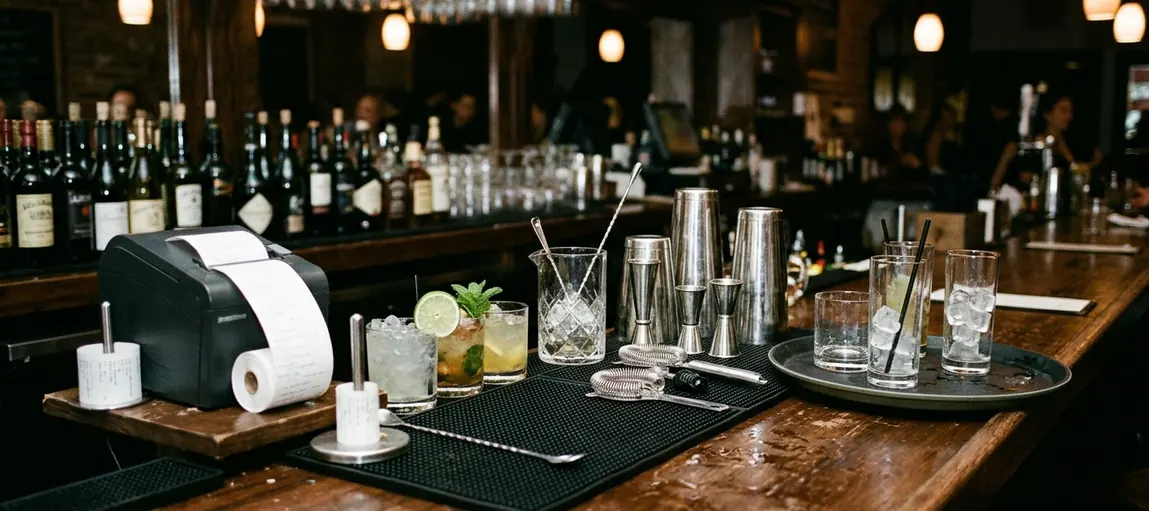
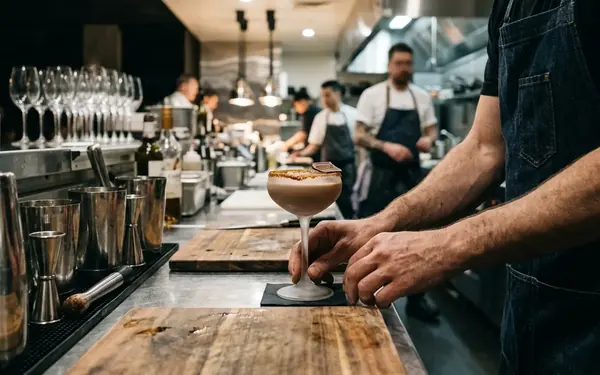
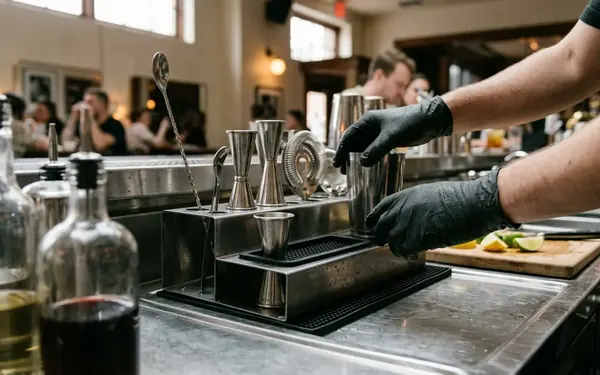
Every full-service dining room relies on a service well—the dedicated station where a bartender builds drinks for floor servers. You can spot it by the rubber bar mats, ticket printer, and constant rotation of trays. Standing in front of this zone to catch a bartender's eye or resting coats and handbags on its rail stalls drink delivery for the entire restaurant. Keep the service well completely clear of personal belongings and standing traffic, and move to an open section of the counter meant for direct guest orders.
Describe Your Palate Before Naming a Cocktail
Ordering craft cocktails works best when you describe how you want the drink to taste before locking onto a specific recipe title. Menu descriptions often list house infusions, regional amari, or unfamiliar modifier liqueurs without explaining how sweet, acidic, or heavy the final glass feels. Giving the bartender a concise flavor brief allows them to match your palate to the actual build of their recipes.
Give the bartender a usable flavor brief
Formula: Base spirit or openness + flavor direction + sweetness preference + ingredient to avoid
Example: Gin or a similar recommendation; citrus and herbal; less sweet; no cucumber.
Understanding a few contrasting style terms makes this conversation effortless. Bright describes a citrus-led, crisp, or lively impression on the palate, whereas spirit-forward refers to a stirred style where the base distillation leads the aroma and flavor. Keep in mind that spirit-forward describes perceived flavor style rather than a dependable measure of total alcohol content; a bright, juice-laden shaken drink can carry just as much high-proof spirit as an austere stirred glass. You can also contrast bitter profiles against fruit-led builds, or ask for something refreshing and tall over crushed ice rather than rich and silky.
Scripts for Ordering With Clarity
When you want a guided recommendation that respects both your palate and your budget, keep the complete brief short: "I usually enjoy gin, citrus, and herbal flavors. I prefer something less sweet, and I would like to stay within this menu's price range. What would you suggest?" If the bartender suggests an off-menu classic or bespoke build, ask the price of that suggested drink before confirming preparation instead of assuming it matches the printed list.
State flavor dislikes separately from medical needs. For a simple aversion, add: "Please avoid cucumber; I dislike the flavor."
For guests ordering zero-proof drinks, precision matters just as much. A citrus-led alcohol-free request is not finished at the menu label: ask whether the bitters, spirit alternative, and other ingredients contain alcohol. Use a complete inquiry: "I'd like a citrus-led, herbal drink that is less sweet, with no alcohol. Please avoid cucumber. Do any of the ingredients contain alcohol, including the bitters or any spirit alternative?"
Make Changes, Disclose Allergies, and Raise Problems Clearly
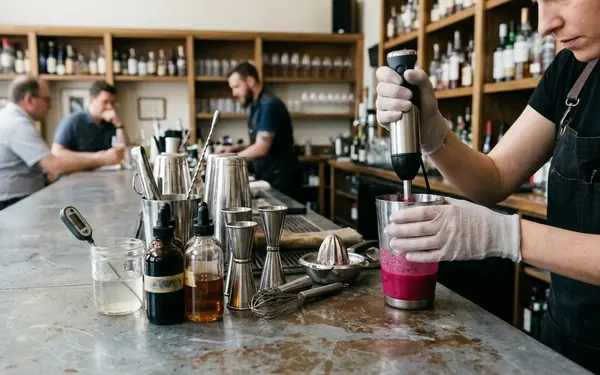
Modern bar programs frequently pre-batch spirit blends, clarify citrus juices, or balance house syrups hours before doors open to keep service brisk. Because key components may already be combined in a bottle, modification requests belong in the conversation before the bartender reaches for a jigger.
Instead of dictating how to rebuild a house spec, frame the adjustment as an open question: "Could this be made less sweet, or would another drink suit that preference better?" This phrasing gives the bartender room to explain whether the sweetener is adjustable on the fly or steer you toward a drier cocktail on the list.
Allergy Protocols Behind the Counter
Dietary restrictions and allergies require explicit disclosure before ordering. Orgeat, falernum, specialty bitters, and house cordials frequently hide tree nuts, dairy, gluten, or botanical allergens behind proprietary names. Identify the exact allergen aloud and ask how the bar manages cross-contact: "I have an allergy to almond. Does this drink contain almond, including in syrups, and can you explain how you handle shared equipment?"
Even in attentive lounges, staff assurances are not a universal guarantee against cross-contact; a guest should decline the drink when the venue cannot confirm suitable preparation for the disclosed allergy.
Raising an Issue With a Served Drink
When a glass arrives and something seems off, address it immediately and politely. Wait until the bartender steps back to your section, make eye contact, and distinguish between three situations:
- Wrong order delivered: "I ordered the gin version, but this seems to be the whiskey version. Could you check it for me?"
- Unexpected flavor balance: "This tastes much more bitter than I expected. Is that the intended profile?"
- Suspected allergen or avoided ingredient: Stop drinking immediately and name the ingredient right away so the staff can verify the bottle and dump the glass if needed.
Coordinate Cocktails With Dinner and Busy Service
Sitting at the bar before moving to a dining table requires transparent timing. Mention your reservation or departure deadline the moment the bartender greets you, well before you browse the spirit list. Framing the clock as a question allows the staff to advise you honestly: "We have a table reservation shortly. Is there time for a cocktail here, or should we order at the table?"
If you have a hard exit for a theater curtain or another commitment, state the exact clock time—"We need to leave at 7:15"—without turning that boundary into a demand that the bar rush its preparation queue.
During a Friday rush, a bartender who is not speaking to a waiting guest is rarely idle. Observe the rail: they may be measuring five components for a complex ticket, stirring two mixing glasses simultaneously, expressing citrus oils, or garnishing trays for the dining room. While the bartender finishes those mixing glasses, a waiting guest stays visible near the bar edge without waving cash or tapping a glass.
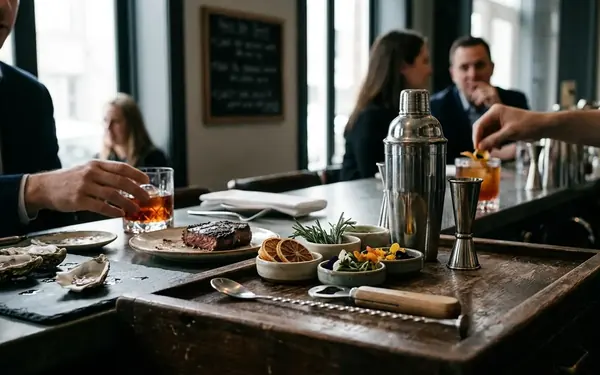
If you plan to eat at the bar or carry a cocktail into the dining room, align the liquid with your food order. Tell the bartender what you plan to eat: "I'm ordering a rich braised dish and would like something bright rather than another rich flavor." When the host approaches to seat your party mid-drink, remember that the lounge-to-table handoff has two separate parts: permission to carry the cocktails and confirmation that the open tab follows.
Share the Bar Without Taking Over the Room
A vibrant lounge atmosphere depends on how generously guests share compact physical real estate. Comfortable circulation and clear sightlines help preserve the mood of a room. When a counter fills up, small physical habits keep the bar welcoming for everyone.
- Keep adjacent stools open: An empty seat beside you remains available to the next arriving guest; stow handbags, jackets, and shopping bags on under-counter hooks or at your own feet rather than turning a neighboring stool into luggage storage.
- Leave the working bar top clear: Keep phones, sunglasses, and elbows out of the spill mat zone and away from the landing strip where servers pick up completed trays.
- Yield the bartender's attention gracefully: Warm hospitality does not obligate a bartender to maintain a continuous personal conversation while something like twenty other seats need water, menus, and checks. Let them pivot to neighboring guests without competing for the floor.
Photography calls for similar spatial awareness. Taking a quick, discreet photo of your own glass without flash rarely disrupts a room, provided house rules permit cameras. Before raising a phone, check the frame to make sure neither the working staff nor neighboring guests appear identifiable in the background, and always ask permission before photographing anyone directly.
Check Service Charges Before Closing Your Tab
Smooth payment starts before the first pour is measured. If your group wants separate checks or plans to split the bill across multiple cards, mention that arrangement before ordering. Point-of-sale systems and venue policies vary widely during peak hours, and asking upfront lets the bartender organize seats accurately or explain house limits on split checks before items stack up on a single tab.
When the check folder arrives, take approximately thirty seconds to read the itemized slip carefully. Review three distinct categories on the receipt:
- Ordered items: Verify that the specific pours and modifiers match what your party actually received.
- Service charges: Look for percentage lines labeled as administrative fees, hospitality charges, or large-party assessments.
- Gratuity language: Read the fine print to see how the venue describes tip distribution.
Never assume that a line labeled "service charge" and one labeled "automatic gratuity" operate identically or reach the bar team in the same manner. When the receipt wording feels ambiguous, ask directly before signing: "Could you explain this charge and whether gratuity is already included?" Clear verification prevents both accidental double-tipping and inadvertently stiffing the bartender.
A Pre-Dinner Houston Bar Visit, From Arrival to Payment
Consider a hypothetical evening at a busy Houston dining lounge. Two guests arrive at 6:10 p.m. ahead of their 6:40 p.m. dinner reservation—giving them a 30-minute personal planning window before their table is called. One guest wants a gin cocktail, while the other prefers an alcohol-free drink.
Step 1: Check in at the host stand. Instead of walking straight to two empty stools, the guests pause at the podium and ask, "May we sit at the bar before our reservation, or should we wait here?" The host points them toward two open seats near the center of the counter. They take those two stools, hang their coats on the under-bar hooks, and leave the unoccupied third stool beside them completely clear for the next arrival.
Step 2: Establish the timeline. While the bartender finishes garnishing a tray of drinks at the service well, the guests wait quietly with their menus closed to signal readiness. Once the bartender steps over and greets them, they share their clock immediately: "We have dinner reserved for 6:40. Is there time for a drink here before we sit down, or should we order at the table?" The bartender confirms there is plenty of time for a round at the counter.
Step 3: Deliver concise palate briefs. Rather than guessing at unfamiliar menu titles, the first guest says, "I enjoy gin, citrus, and herbal flavors, preferably less sweet. What would you recommend from this menu?" The second guest follows with their own parameters: "I'd like a citrus-led alcohol-free option, preferably less sweet. Do any of its ingredients contain alcohol?" The bartender confirms a house botanical shrub build is completely zero-proof and recommends a dry gin sour with chartreusian herbs from the printed list.
Step 4: Coordinate the table transfer and close out. At 6:35 p.m., the host stops by to let the pair know their dining table is ready while half of each drink remains. Turning to the bartender, the guests handle both parts of the move at once: "May we take these drinks to the table, and will this tab transfer with us?" The bartender explains that guests may carry their glasses into the dining room, though bar tabs must be closed at the counter before moving. The guests ask for the check, review the itemized drinks alongside the printed gratuity notice, settle the payment, thank the bartender by name, and carry their glasses to dinner.
Your Thoughts
No comments so far.
Add Your Thoughts