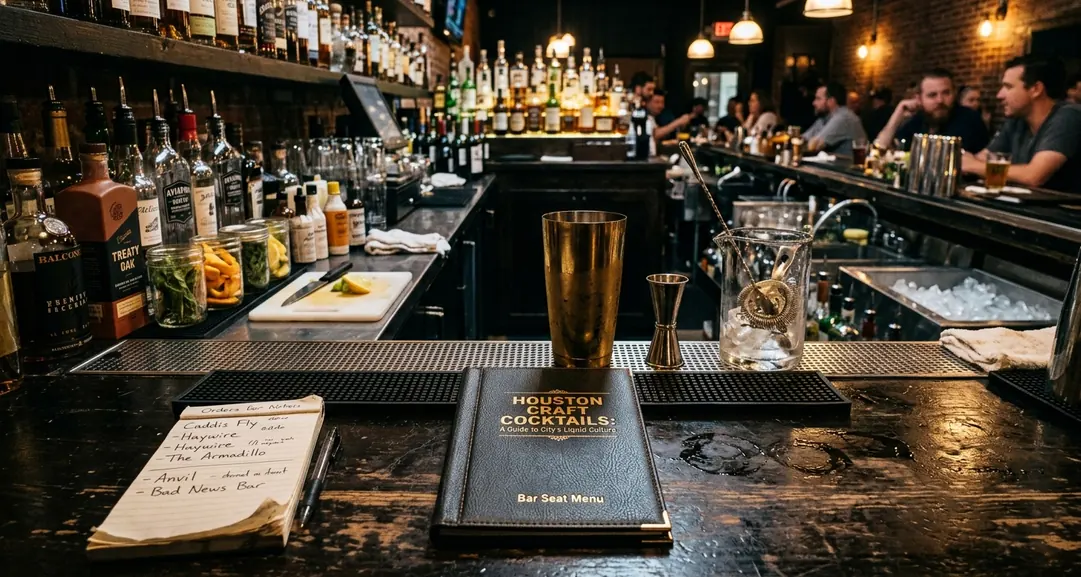
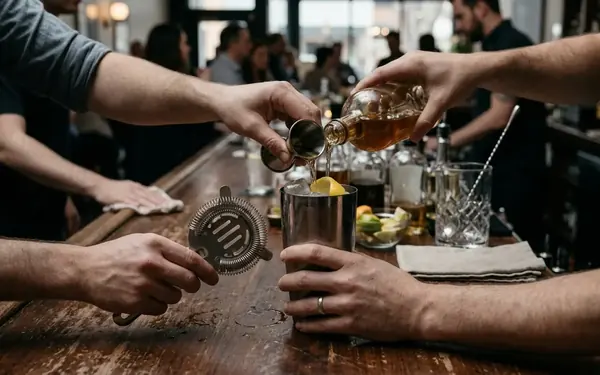
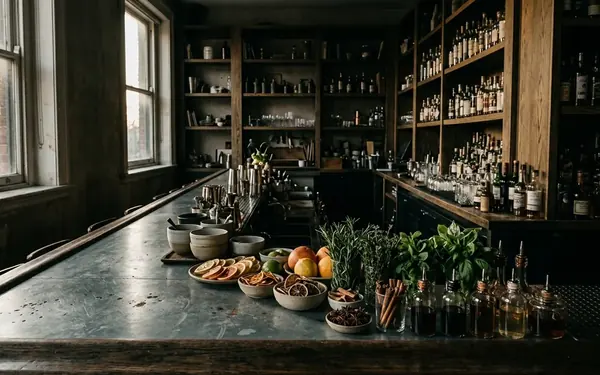
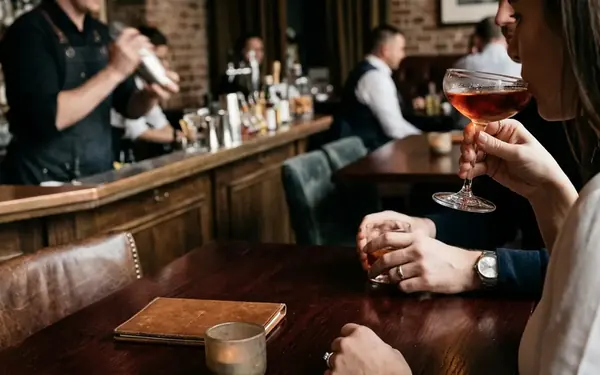
At 6:40 on a Houston evening, the bar has that coppery glow that makes every bottle look intentional. A guest settles into a high seat, opens the cocktail menu, and hears ice crack inside a shaker two stations down. The server will be back soon, probably within the first minute or two, and the safe order is already whispering: margarita, old fashioned, gin and tonic.
That pressure arrives before curiosity does.
Warm bar light, a short menu window, and the small pressure of choosing well.
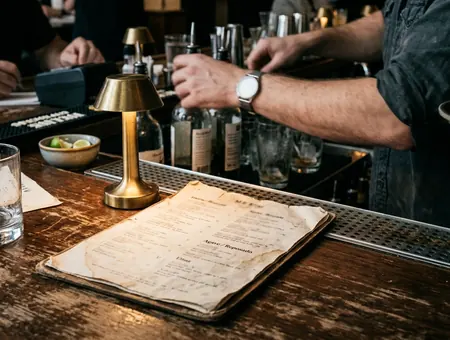
Craft cocktail menus often speak in compact, poetic lines. They assume the reader can read spirits, modifiers, technique, and balance from a handful of words. Beginners usually do not need a lecture on distillation. They need a way to look at one menu line and decide whether the drink will fit the moment.
The method is simple: read the line in order, translate ingredients into flavor families, then use glassware and technique to predict how the drink will feel. You do not have to pretend to be a bartender. You only need to ask a better first question.
Why Craft Cocktail Menus Can Feel Cryptic
A cocktail menu is compressed by design. A listing may need to hold the drink name, base spirit, modifier, acid, sweetener, bitter element, garnish, and serving style in one tight space. Count those pieces and a simple-looking line can carry in the ballpark of five to nine visible cues.
That is efficient for the bar. It can feel like a puzzle for the guest.
Unfamiliar bottles create the first snag. Fortified wine, amaro, shrub, cordial, bitters, absinthe rinse, chile tincture, house syrup, infused spirit: each word may be clear to the person building the drink and vague to the person buying it. Even familiar ingredients can mislead. Mezcal, grapefruit, chile, and lime might produce a sharp high-acid drink, a softly smoky one, a bitter aperitif-style cocktail, or something only lightly spicy at the rim.
Note: Menu cues can improve the first question you ask, but the printed description cannot reveal the exact recipe, dilution, or alcohol strength by itself.
The difference matters. An ingredient list tells you what is present. A flavor promise tells you what leads. Grapefruit on a menu does not guarantee sweetness. Chile does not guarantee heat. Mezcal does not guarantee a campfire in the glass.
Read the Cocktail Line in the Right Order
I like a scan that starts with the foundation and moves outward. Once the habit settles in, it takes less than a minute.
A quick reading order
Find the base spirit first. Look for gin, whiskey, rum, tequila, mezcal, vodka, brandy, or a lower-proof base.
Identify the modifier. This might be vermouth, amaro, aperitif, cordial, liqueur, fortified wine, rinse, or infusion.
Look for acid and sweetness. Lemon, lime, grapefruit, pineapple, syrup, honey, agave, and cordial tell you where the balance may lean.
Spot bitter or herbal elements. Bitters, gentian, amaro, absinthe, basil, mint, rosemary, and tea can change the finish.
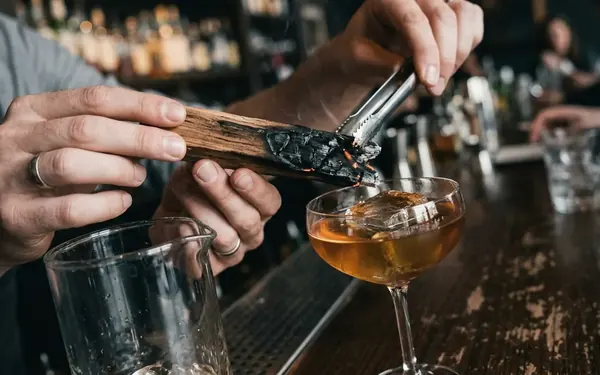
Check technique and presentation. Glassware, ice, bubbles, foam, and garnish often explain pace and texture.
Base spirits give the first practical clue. Gin often signals botanical lift. Whiskey brings warmth, oak, and grain. Rum can move toward fruit, molasses, or grassy depth. Tequila and mezcal carry agave character, with mezcal often reading smokier or earthier. Vodka usually gives neutrality. Brandy tends to feel rounder.
Modifiers bend the drink’s direction. Vermouth can dry out or lengthen a cocktail. Amaro can add bitterness, sweetness, and herbal depth at once. Curaçao points toward orange. Coffee liqueur deepens and darkens. An absinthe rinse may add aroma more than volume.
Take a line such as gin, dry vermouth, elderflower, lemon, cucumber. Gin gives botanical lift. Dry vermouth lengthens and tightens the structure. Elderflower adds floral sweetness. Lemon supplies acid. Cucumber suggests a cool, green finish. Before tasting it, you already know it probably sits closer to crisp and fragrant than heavy and brooding.
Translate Ingredients Into Flavor Families
Beginners do not need to memorize every bottle on the backbar. It is more useful to sort ingredients into sensory families, because guests order feelings more often than formulas.
Useful flavor families to recognize
Citrus and acid: lemon, lime, grapefruit, yuzu, verjus, shrub
One ingredient can sit in more than one family. Grapefruit can bring acidity and bitterness. Basil adds freshness and a peppery edge. Amaro can feel sweet at the front and bitter at the finish. That overlap is where many craft cocktails become interesting.
Balance cues usually appear in pairs. Citrus plus syrup points toward a sour-style build. Spirit plus vermouth or amaro points toward a stirred aperitif or a nightcap. Bubbles plus citrus suggest lift and refreshment.
Quick Tip: Do not let fruit words do all the work. Pineapple or peach on a menu may still finish tart, dry, bitter, or restrained if acid, aperitif, or sparkling wine leads the build.
Use Technique to Predict Weight, Texture, and Pace
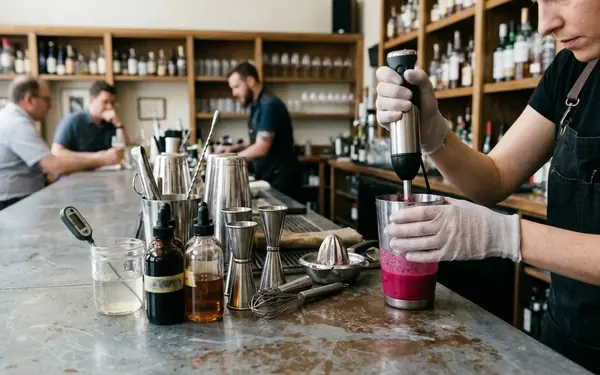
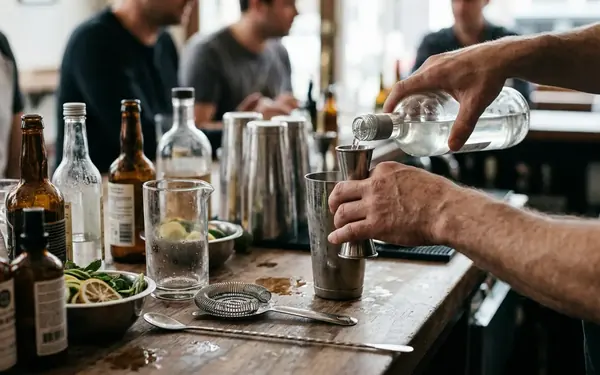
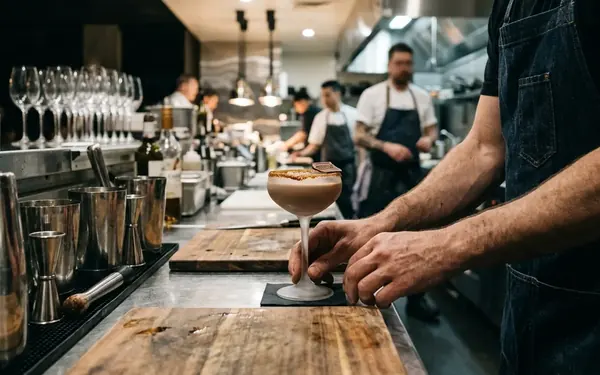
Technique changes the same ingredients in the glass. Tequila, lime, and grapefruit shaken hard will usually feel colder, airier, and more diluted than a stirred build with the same spirit family and a bitter modifier. The recipe matters, but preparation sets the first expectation.
Shaken drinks tend to be brisk. Many are shaken hard for roughly 8 to 15 seconds, enough to chill, dilute, and add texture. Stirred spirit-forward drinks are often stirred for about 20 to 35 seconds before straining, which keeps the texture silkier and denser.
Glassware gives service clues
Coupe or Nick and Nora: concise, chilled, usually served without ice
Rocks glass: slower sipping over ice, though crushed ice changes that expectation
Collins or highball: taller, longer, often refreshing
Flute: sparkling structure and a more vertical, lifted feel
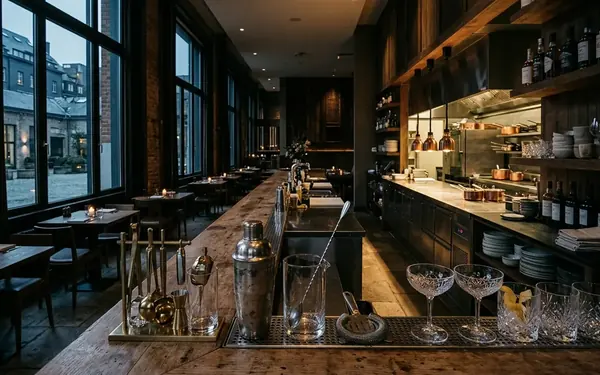
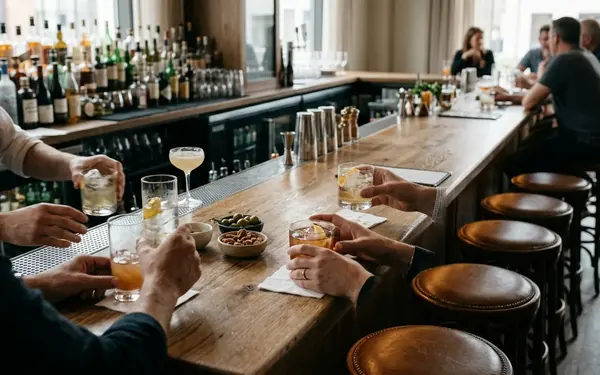
A rocks glass can suggest slow sipping, but context matters. A crushed-ice rocks drink may dilute quickly and feel more refreshing than spirit-forward. That is a useful distinction on a humid Houston patio night, when a drink that loosens over time may be exactly right.
Texture words deserve attention. Egg white or aquafaba means foam. Cream or coconut means richness. Clarified milk punch often reads smooth and rounded rather than creamy in the obvious sense. Crushed ice chills fast and changes the drink as it melts.
Match the Drink to the Moment
A technically polished cocktail can still be the wrong drink for the table. I look at timing first, then food, then conversation pace.
Before dinner, roughly 5:30 to 7:15 p.m., an aperitif, spritz, highball, or citrus-led drink can open the appetite without taking over. During main-meal pacing, from about 7:15 to 9:15 p.m., the drink has to share space with food. Later, around 9:15 to 11:30 p.m., a stirred drink, nightcap, or richer build may feel more natural in the lounge atmosphere.
Food changes the decision quickly. Citrus and bubbles can refresh rich dishes. Bitter and herbal drinks can bridge savory courses. Smoky or spirit-forward cocktails may overpower delicate plates, especially seafood, mild cheeses, or subtle vegetable dishes.
Use a three-part ordering sentence. Keep it short enough to say before the bartender’s attention has to move down the bar.
Try: “I like gin and citrus, I want something bright and not too sweet, and I am avoiding smoke.”
That sentence helps in a few ways. It gives the bartender a base, a direction, and a boundary. It also leaves room for the bar’s style, which is where cocktail service becomes hospitality rather than guesswork.
Avoid the Most Common Menu Misreads
Familiar cocktail names can be traps. A martini variation may not mean gin and dry vermouth. It might include sherry, brine, clarified tomato, olive oil, or a different base spirit. A margarita, daiquiri, old fashioned, or spritz can also appear as a creative variation rather than a classic specification.
Price creates another misread. A higher price does not automatically mean stronger, sweeter, or more complex. It may reflect the base spirit, rarity, glassware, preparation, garnish, or labor. A clarified drink, a house cordial, or a carefully sourced spirit can push cost without changing the drink in the way a beginner expects.
Comfort questions belong before the order goes to the well. A remake after the drink is built can add roughly 3 to 8 minutes during a busy lounge turn, and more important, allergens should never be discovered at the table.
Ask directly about hidden-risk ingredients
Nut orgeat or nut-infused spirits
Dairy in clarified milk punch or cream drinks
Egg white or aquafaba foam
Sesame, chile tincture, or spice-infused spirits
Coffee liqueur, tea syrup, or other caffeine sources
A good question is simple: “Does this contain nuts, dairy, egg, sesame, caffeine, or unexpected spice?” It sounds plain because it should.
Put It Together Before You Order
Here is a practice line, invented for reading practice rather than borrowed from a specific Houston bar:
reposado tequila, grapefruit cordial, lime, gentian aperitif, smoked salt
Decode the line step by step
Reposado tequila: expect agave warmth with a little oak and roundness.
Grapefruit cordial: expect citrus peel, controlled sweetness, and some acidity.
Lime: expect sharper acid and a cleaner edge.
Gentian aperitif: expect bitterness, likely in a crisp appetite-opening register.
Smoked salt: expect aroma and savory lift, not necessarily a fully smoky drink.
The likely read: refreshing, citrus-led, lightly bitter, savory at the rim or finish, and not purely sweet. If you like margaritas but want something drier and more grown-up in shape, this line is worth asking about. If you dislike bitterness, say so before ordering.
Picture the guest from the first seat again. The menu closes. The bartender steps over with a mixing tin still cold in one hand. The guest does not point at random this time. She says, “I want something bright with a bitter edge, and I am avoiding dairy.” A minute later, under the warm Houston bar lights, the glass lands with smoked salt catching just enough aroma to match the evening.



Your Thoughts
No comments so far.
Add Your Thoughts