
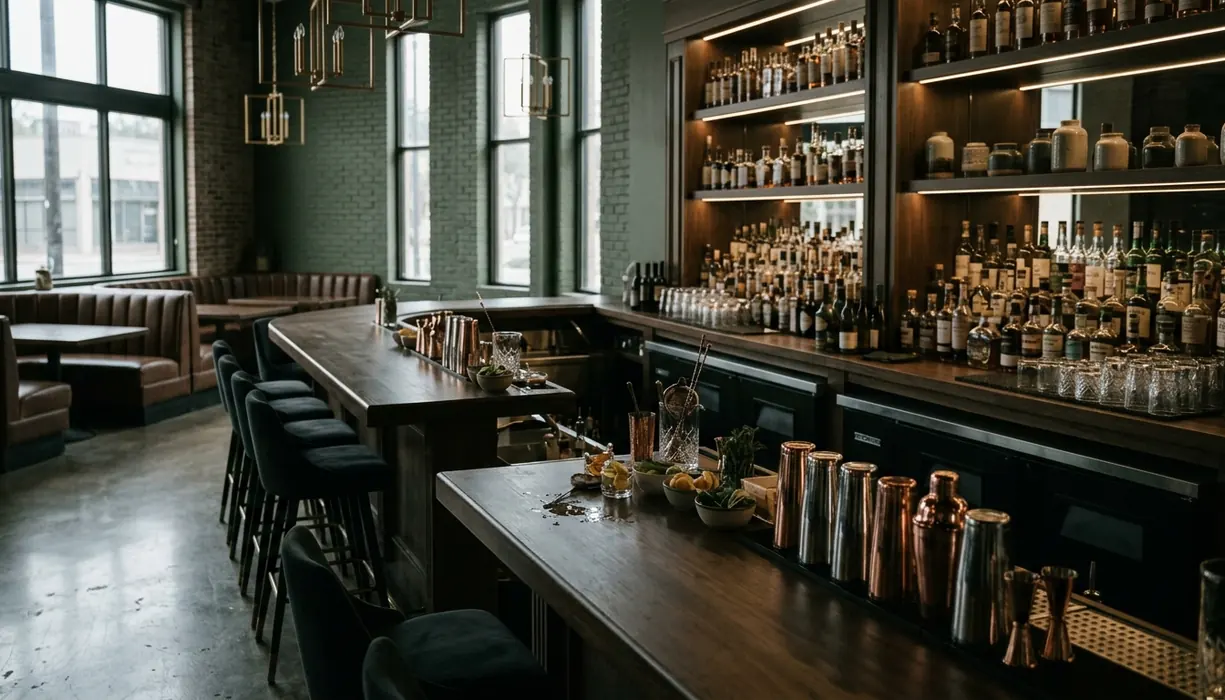
What Makes a Houston Cocktail Feel Like Houston?
What makes a Houston cocktail feel like Houston before anyone says the city's name?
The honest answer never starts with a logo on the menu or a skyline projected on the wall. It starts in the glass and in the room. A drink reads Houstonian when its acidity, salinity, and heat point back to a Gulf Coast palate, when the service moves with warmth instead of ceremony, and when the setting invites you to stay a while rather than perform.
Houston's modern cocktail scene is defined by local appetite, Gulf Coast ingredients, global culinary fluency, and a hospitality style that prizes polish without stiffness. None of those four things works alone. Together they explain why the strongest bars here feel unmistakably grounded.
A quick note on scope. This is an editorial view of craft cocktail bars, fine-dining bar seats, hotel lounges, and restaurant bar programs across a recent window, roughly 2022 through 2025, when many elevated programs had settled into steady menu cycles rather than reopening triage. It is not a census of every bar in the city. Think of it as the drinks you'd order before dinner, alongside a meal, or across a roughly hour- to two-hour lounge visit.
The Background: A City Too Diverse for One Cocktail Identity
Houston is a food city first and a cocktail city second, and that order matters. Bars here borrow instinctively from kitchens, from neighborhoods, and from decades of migration. The drink list tends to echo whatever the city is already eating.
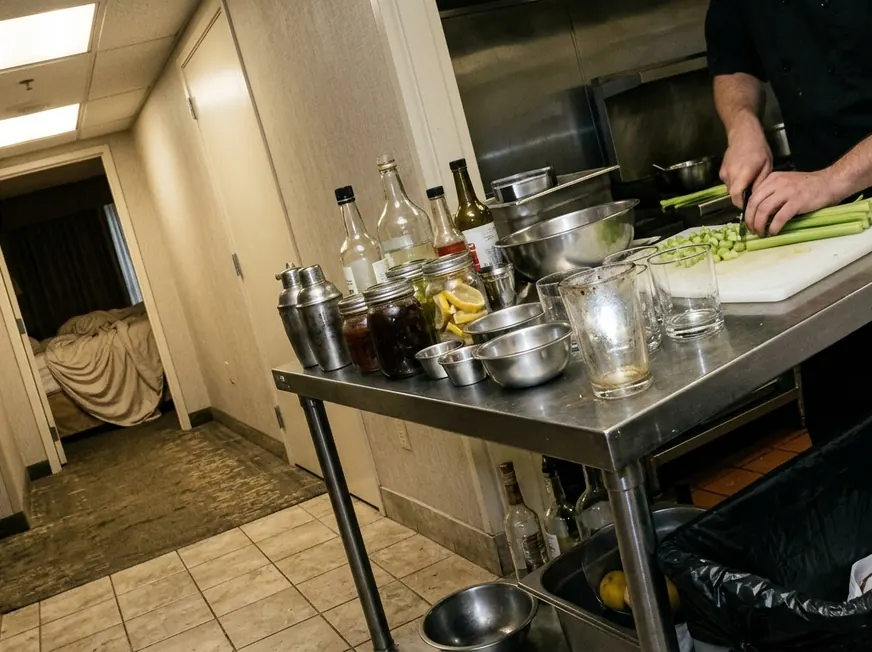
Scale complicates any tidy branding. The city covers in the ballpark of 600 square miles inside its limits, so a guest can drive roughly twenty to forty-five minutes across town and land in a completely different cocktail culture. There is no single historic drink to rally around, no one nightlife district that sets the tone, no dominant aesthetic that every room copies.
Instead, several formats shape the scene at once, each pulling in its own direction. Small independent cocktail rooms chase a personal point of view. Restaurant bars with roughly ten to twenty seats build drinks that talk to the kitchen. Larger hotel lounges balance travelers and locals. Patio-forward venues shift their pacing between early evening and late night, when the crowd and the weather both change.
Studying Houston as a restaurant town first makes the diversity feel like an asset rather than a lack of identity. The city never had to agree on one drink because it was too busy cooking.
The Four Pillars of Houston's Modern Bar Style
Four pillars carry the modern style, and each one leaves evidence you can taste or watch happen.
Gulf Coast Flavor
The first pillar is sensory and regional: citrus, tropical fruit, fresh herbs, spice, a whisper of seafood-adjacent salinity, and heat. Not every bar reaches for the same pantry, and that's the point. But when a sour-style drink lands right in Houston, it often carries three-quarters to a full ounce of fresh citrus, a restrained quarter- to half-ounce spice or fruit modifier, and a finish that refuses to let chile, tamarind, or tropical fruit collapse into syrupy novelty.
Cross-Cultural Technique
The second pillar is fluency. Houston menus move comfortably between agave spirits, rum, whiskey, and vermouth, then reach for tea, chile, tamarind, pandan, clarified milk, and culinary infusions without treating any of them as a stunt. This is a city where a bartender can pivot from a stirred spirit-forward drink to a tropical highball in the same conversation, because the guests come from everywhere and expect the range.
Fine-Dining Discipline
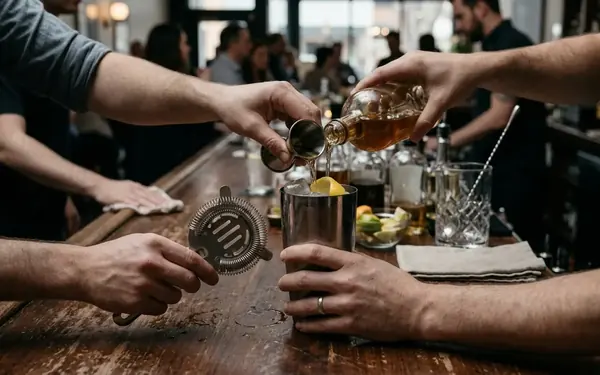
The third pillar shows up in operational detail, and it's the clearest marker of a mature program. Chilled glassware held back until the moment of the pour. Stirred drinks diluted patiently over roughly a twenty- to thirty-five-second build. Garnish restraint, meaning one clear aromatic or visual cue instead of a crowded rim. Menu pacing that reads the table. Service language that guides without lecturing.
That discipline is what separates a drink that merely tastes good from a drink that feels finished.
Where the Pillars Meet
The pillars rarely appear in isolation. A grapefruit-and-serrano highball built with a light hand and served in a cold glass touches all four at once, which is exactly why it feels like home rather than like a template.
Why Trend Chasing Misreads the Scene
Here's the counterargument worth taking seriously. Plenty of readers define modern cocktail culture through national trends: clarified cocktails, maximalist garnish, sprawling zero-proof menus, backbars stacked with rare bottles. Those things exist in Houston, and some of them are done beautifully.
They just don't explain why the city's best rooms feel distinct.
Consider the failure case. A technically perfect smoked Old Fashioned in a luxury room can be flawlessly made and say almost nothing about Houston, because the smoke, the glassware, the garnish, and the service could be lifted unchanged and dropped into any national hotel bar. Capability is not identity.
Technique proves planning, not point of view. A clarified milk-punch-style cocktail often demands a six- to eighteen-hour preparation and filtration window. That's real skill and real patience. But the effort demonstrates that a bar can, not that the drink belongs to this place.
The same logic applies to variety. A compact modern list might run in the ballpark of eight to fourteen house cocktails, with zero-proof options, agave drinks, stirred spirit-forward pours, and highballs all sharing the page. The identity never comes from the categories themselves. It comes from how those categories are flavored and served.
A long backbar of rare spirits tells you even less if the staff can't steer a guest toward flavor, proof, pacing, and occasion. The bottles are furniture until someone makes them useful.
Note: This critique lands hardest on venues chasing a durable hospitality point of view. Rooms built mainly around spectacle, bottle service, or a high-volume social feed are playing a different game, and judging them by these standards misses their intent.
The tricky part is that context decides everything. Chile, tamarind, pandan, grapefruit, or saline can feel deeply local in one glass and gimmicky in the next. The difference is whether the ingredient reshapes the drink's structure, finish, and relationship to food, or whether it just decorates the menu copy.
How to Read a Houston Cocktail Menu Like an Insider
Turn the editorial criteria into a method and menu reading gets easier fast. The process is simple: scan for regional cues first, then test whether those cues are actually integrated, then judge balance over novelty.
Start with the specific, not the decorative. Look for Gulf citrus, chile heat, tropical acidity, bitter herbs, savory notes, or a pairing that clearly echoes the kitchen. A menu that name-drops an exotic ingredient but tastes generic has told on itself.
Then judge the drink on its structure rather than its story. A good cocktail shows intention across sweetness, acidity, temperature, dilution, aroma, and finish. Novelty fades by the second sip. Balance carries the whole glass.
Here's a practical ordering strategy for a single visit:
- One house original. This reveals imagination and the bar's actual point of view.
- One classic variation. This exposes fundamentals: proportion, ice handling, and restraint. A kitchen can hide behind a flashy signature, but a Daiquiri or a Martinez tells the truth.
When you want guidance, give the bartender something to work with. A strong prompt offers two constraints and one preference, something like "citrus-forward, not too sweet, with agave or rum." A confident team should answer in the ballpark of thirty to ninety seconds without turning your request into a seminar. The speed and ease of that exchange is itself a signal about the program's depth.
Quick Tip: If the classic variation arrives under-diluted or in a warm glass, trust that over any amount of menu poetry. Fundamentals don't lie.
What Houston's Cocktail Scene Says About the City Now
At the bar, the tension resolves. Houston's cocktail identity is not weak because it lacks a single uniform look. It is strong precisely because it can absorb many culinary languages and still feel coherent in the glass.
The best rooms hold two things at once: sophistication and generosity. Polished enough to belong beside fine dining, relaxed enough to feel genuinely hospitable. That balance is the city's real signature, more than any one spirit or technique.
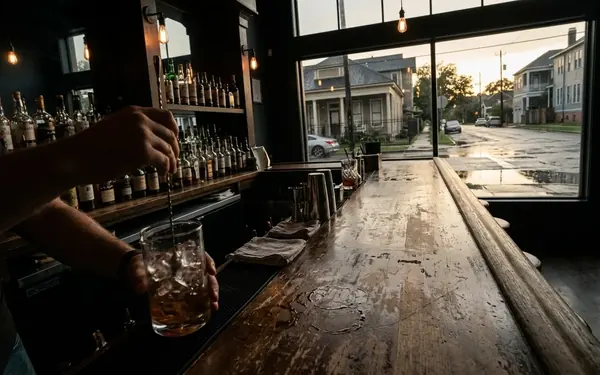
Climate keeps the scene honest. Warm-weather service pressure runs hard from roughly May through September, when shaken drinks, highballs, crushed ice, citrus, salt, and lighter aromatics simply feel more natural than a heavy stirred-only list. The weather edits the menu whether the bar admits it or not.
Modernity here isn't just technology, rarity, or luxury. It's responsiveness, to place, palate, climate, cuisine, and to what a guest actually wants on a given night. The rare bottle and the clarified punch are tools, not the point.
And the geography is not decorative background. Houston sits roughly 45 to 55 miles from the Gulf Coast, close enough that port-city trade in seafood, citrus, spice, and the sheer humidity of the air all shape local taste directly. That short distance is why a squeeze of grapefruit and a pinch of salt can taste like a location and not just a recipe.
Your Thoughts
No comments so far.
Add Your Thoughts