
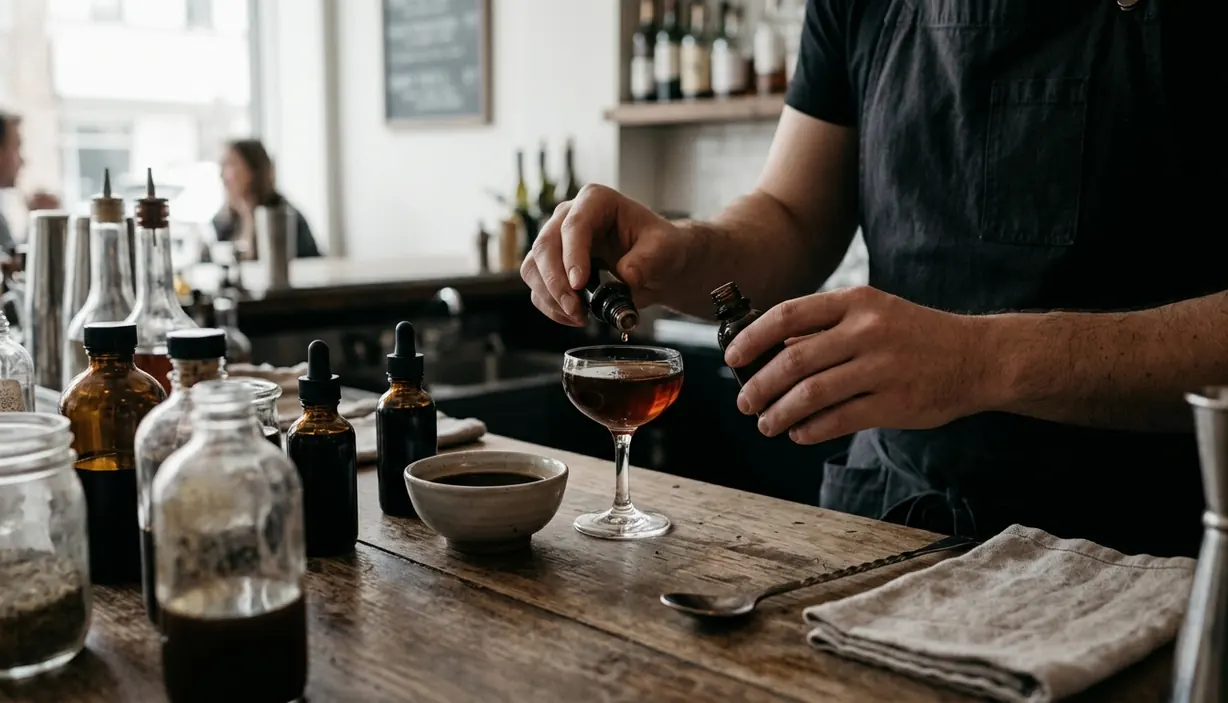
A cocktail menu is a translation problem. It names spirits plainly, then buries the actual flavor architecture in the language of modifiers. A drink reads as "bourbon, aromatic bitters, demerara" and the base spirit gets top billing, but the two ingredients that decide whether the glass finishes lean or rich, bright or warm, are the ones a guest tends to skim.
This guide treats modifiers by function, not by shelf placement. The goal is a working vocabulary that lets any guest at a Houston hotel bar or craft cocktail room predict a drink before the first sip.
What Counts as a Cocktail Modifier?
A modifier is any ingredient that changes a drink's balance, aroma, sweetness, bitterness, texture, perceived dilution, or finish without serving as the primary spirit. That definition is deliberately about the job an ingredient does rather than where it lives behind the bar.
Bitters and syrups are the two families most people picture first. They are far from the whole set. Vermouth, liqueurs, amari, citrus juice, saline solutions, and fortified wines all modify structure, sometimes carrying more of a drink's identity than the base itself.
Quantity clarifies the point. In a single build, a modifier might land anywhere from 1 to 3 dashes of bitters, 0.25 to 0.75 oz of syrup, 0.5 to 1 oz of vermouth or liqueur, or 0.5 to 1 oz of citrus juice, depending on whether the drink is stirred, shaken, sour-style, or spirit-forward. Small volumes, outsized influence. That asymmetry is the entire reason modifiers deserve a guest's attention.
Criteria for Selection: What Makes a Modifier Worth Knowing?
The categories below earned their place through repeat appearances on polished lists and through their power to change a drink at service-scale quantities. A few filters shaped the selection.
- Frequency: the modifier turns up across at least three drink families — stirred spirit-forward cocktails, sours or daisies, highballs, tropical crushed-ice drinks, aperitif-style pours, or after-dinner cocktails.
- Structural impact: it shifts balance dramatically in small amounts, on the order of 1 to 3 dashes for bitters, 0.25 to 0.75 oz for syrups, and 0.5 to 1 oz for vermouth, citrus, amaro, or orange liqueur.
- Cross-use: it works across both classic and modern builds rather than one signature drink.
- Guest relevance: it connects to tasting notes a guest can actually name at the bar.
The list favors categories over niche brands, which lets readers recognize patterns across restaurant lounges, hotel bars, and dedicated cocktail rooms. One honest limit belongs here: highly experimental programs may lean on fermentation, clarified juices, tinctures, or house extractions that matter more than any standard category, and those defy a tidy list.
How Modifiers Change the Way a Cocktail Reads
Modifiers operate through eight levers: sweetness, bitterness, acidity, alcohol level, aroma, texture, color, and finish. A guest reads a menu as a list of tastes. A bartender builds around balance. The gap between those two habits is where confusion lives.
Consider the difference between a flavor note and a structural role. Orange bitters taste like citrus peel. In a Martini, though, their job is to sharpen aroma and lift the drink without adding the acidity or water of actual juice. The note is citrus; the role is aromatic focus.
Three familiar templates show the mechanics. An Old Fashioned-style build pairs spirit with a small sweetener measure and 1 to 3 dashes of bitters, so the modifier work happens through aroma, bitterness, and perceived sweetness rather than added volume. A Manhattan leans on vermouth and bitters for weight and herbal length. A Daiquiri lives in a narrow window between 0.5 and 1 oz of lime and 0.5 to 0.75 oz of sweetener — a shift of just 0.25 oz moves it from lean to round.
The Essential Bitters to Recognize
Bitters enter in dashes, not ounces. A practical service range runs 1 to 4 dashes, with most classic stirred cocktails staying near 1 to 3. They are the smallest additions on this list and among the most decisive.
1. Aromatic bitters
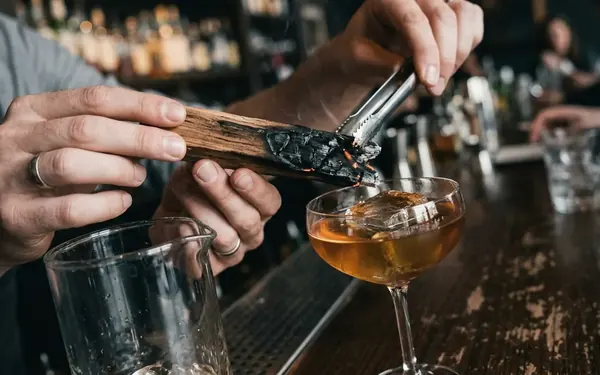
Warm spice, dried fruit, bark, clove-like depth, and a gentle bitter backbone. These anchor the oldest and most widely recognized stirred templates, the Old Fashioned foremost among them. When a menu names a brown-spirit drink without much else, aromatic bitters are usually doing the quiet structural work, tying sweetness and spirit together and lengthening the finish.
2. Orange bitters
Citrus-peel aroma without juice. Orange bitters brighten a Martini or a Manhattan by pushing perfume forward, not by adding acidity or water content. They are the classic example of a modifier whose flavor note and structural role diverge: they read as citrus, but their function is to open aroma and reduce perceived heaviness.
The Syrups That Reveal a Drink's Texture and Sweetness
Syrups are the texture layer. Their ratio tells you as much as their flavor, because a heavier syrup sweetens with less dilution and leaves more body in the glass.
5. Simple syrup
A basic sugar-and-water sweetener, commonly prepared 1:1 by volume or weight. Its whole advantage is speed of integration: dissolved sugar mixes into a cold drink instantly, where granulated sugar drags and grits. When a menu lists simple syrup, expect clean sweetness with minimal added character.
6. Demerara syrup
Deeper, molasses-adjacent richness. Demerara is often built closer to 2:1, so it contributes more body with less water, which is exactly what a stirred brown-spirit drink wants. Aged rum and whiskey pair naturally with it. Where simple syrup disappears, demerara leaves a warm, rounded weight on the finish.
7. Honey syrup
Floral viscosity. Straight honey pours too slowly and resists cold mixing, so bars dilute it into honey syrup first, typically between 2:1 and 3:1 honey to water depending on viscosity and service speed. On a menu, honey signals softness and a rounder mouthfeel, common in whiskey sours and warmer-weather builds.
Note: a familiar syrup name can mislead. A menu may list grenadine, but if the bar uses a tart house pomegranate preparation instead of a sweet commercial style, the drink can finish sharper than its name promises. Read the name as a starting point, not a guarantee.
The Modifiers That Decide Whether a Cocktail Feels Light, Bitter, or Long
This final group of modifiers often carries the drink's identity outright. Fortified wines, bitter liqueurs, citrus liqueurs, acids, and saline determine whether a glass feels light, bitter, long, sharp, or appetite-friendly.
10. Vermouth
A fortified-wine modifier in three main styles: sweet, dry, and blanc. Vermouth changes weight, dryness, and herbal length, and it defines the Manhattan and Martini in ways the base spirit alone cannot. One practical detail worth knowing as a guest: vermouth degrades quickly after opening. Careful bars refrigerate opened bottles and move through them within roughly 4 to 8 weeks to keep aroma and herbal clarity intact. A tired bottle shows up as a flat, dull stirred drink.
11. Amari and aperitivo liqueurs
Bitterness built from roots, herbs, citrus peel, and bark. These signal a drink's place in the meal: an aperitivo-style bitterness reads appetite-friendly and bright, while a darker amaro leans after-dinner and contemplative. When a menu foregrounds an amaro, expect the bitterness to be the point, not a background accent.
12. Saline solution
The quietest modifier of all. Saline enters as drops or a barspoon of diluted salt solution, never enough to taste plainly salty. Its job is to sharpen fruit and lengthen flavor. A guest rarely sees it named, but it explains why one bar's citrus drink tastes more vivid than another's built from the same specs.
Format matters as much as ingredient. Orange liqueur in a shaken citrus drink acts as a sweetener and a bridge; the same small measure in a stirred drink mostly adds aroma and polish. Same bottle, two different jobs.
How to Use This List When Reading a Cocktail Menu
Analysis is useful only if it survives contact with a busy bar. Here is a four-step reading sequence that works in the time it takes to flag a bartender.
- Identify the base spirit. This sets the drink's broad territory.
- Find the sweetener or liqueur. Simple, demerara, honey, or an orange liqueur tells you the texture and sweetness ceiling.
- Look for a bitter, fortified, acid, or saline modifier. Bitters, vermouth, amaro, citrus, or saline decide bitterness, dryness, and length.
- Predict weight and finish. Combine the three and imagine the glass before it arrives.
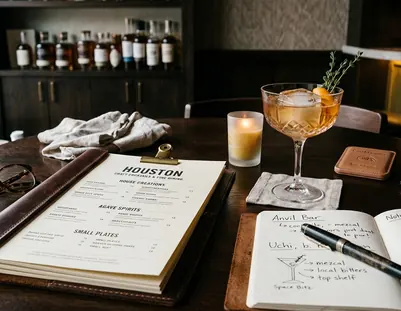
A quick comparison sharpens the method. Take one shared base and change the modifier family. Whiskey with aromatic bitters and demerara reads heavier and warmer; whiskey with citrus, orange liqueur, and a shaken texture reads brighter and leaner. The spirit held constant, the modifiers did all the talking.
Quick Tip: a good guest-facing question can be answered in under 15 seconds. Ask whether a drink leans bright, bitter, stirred, shaken, spirit-forward, or dessert-like, rather than requesting every measurement. Bartenders answer that faster and more usefully than a spec sheet.
So the next time a menu hands you "gin, blanc vermouth, saline, orange bitters," you already know the base is doing less work than the four words after it — which modifier on that line are you actually ordering the drink for?
Your Thoughts
No comments so far.
Add Your Thoughts