
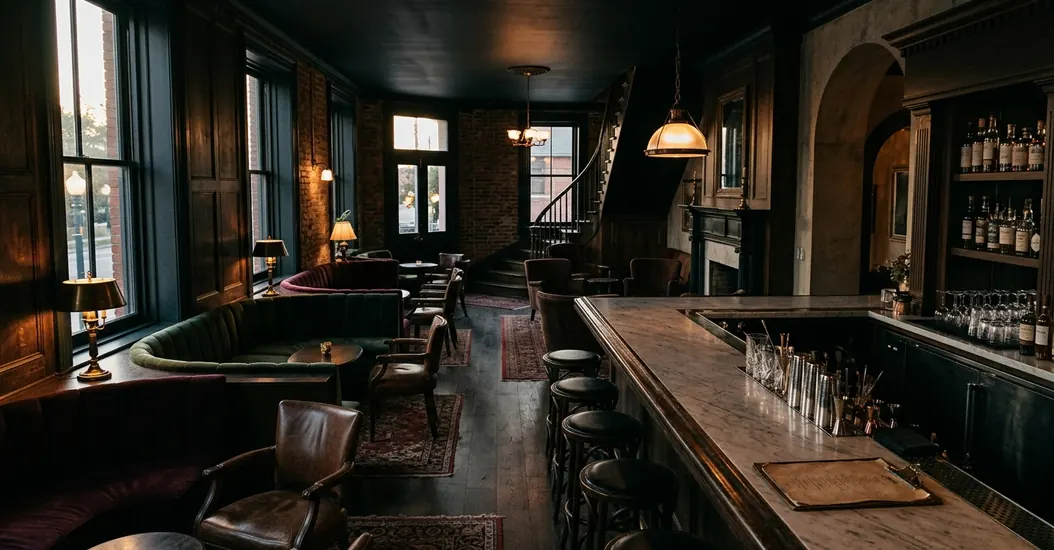
Why Dramatic Atmosphere Changes the Whole Night
The right atmosphere makes a drink feel memorable. The wrong one makes even a strong cocktail program feel flat, harsh, or performative. Dramatic lounge atmosphere is a controlled emotional effect created by the room, service, and drink presentation working together. When these elements align, the space lifts the craft in the glass. When they fail, the environment actively fights the menu.
The stakes are highest when a guest is ordering a cocktail in the ballpark of $16 to $24 or a higher-priced composed drink. At this tier, presentation, pacing, glassware, and comfort become part of the perceived value. A fair review of lounge drama, especially in Houston fine-dining and craft cocktail settings, requires observing roughly the first 20 to 30 minutes after arrival. The emotional effect often changes rapidly after the greeting, seating, first menu read, water service, and the first drink drop.
Observation of Houston fine-dining traffic reveals the most revealing window is usually 7:30 p.m. to 10:30 p.m. on Thursday through Saturday. During these hours, lighting, reservations, bar traffic, and dining-room spillover are all active at once. Advisory relationships maintained across multiple Houston hospitality groups since 2018 inform this baseline for judging lounge drama.
Drama Begins With Contrast, Not Excess
Dramatic lounges usually rely on contrast. Bright against dark. Quiet against lively. Intimate seating against a visible bar stage. A practical contrast check can be made within the first 5 to 8 minutes of a visit. Identify the brightest focal point, the darkest usable seating area, the main sound source, and the path servers take through the room.
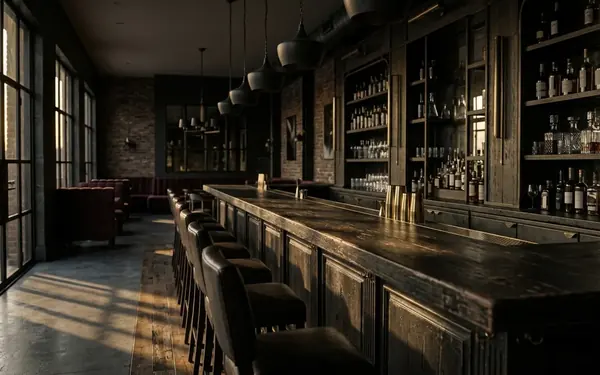
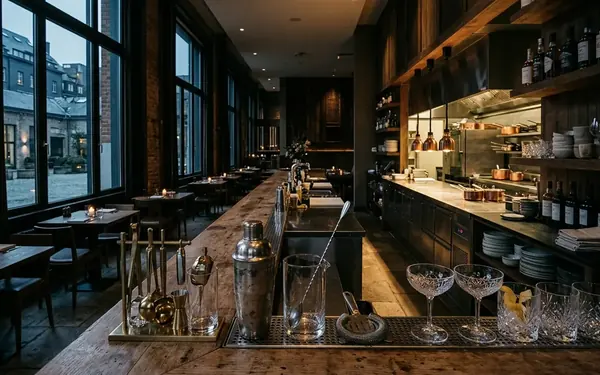
Too much drama becomes theatrical clutter. This overload usually becomes obvious when three or more strong sensory cues compete at the same time. Heavy fragrance at entry, bass-forward music, tableside smoke, reflective walls, and very low menu light force guests to work too hard. In Houston hotel bars and chef-driven dining rooms, the most convincing dramatic rooms often use one dominant visual gesture. A backlit bar, a dark banquette wall, or a sculptural ceiling anchors the space—rather than spreading equal intensity across every surface.
Note: A lounge can look dramatic in photos but fail in person if guests need phone flashlights for menus, raise their voices across a small table, or wait through a long smoke presentation while the drink warms.
Lighting, Sightlines, and the Power of Shadow
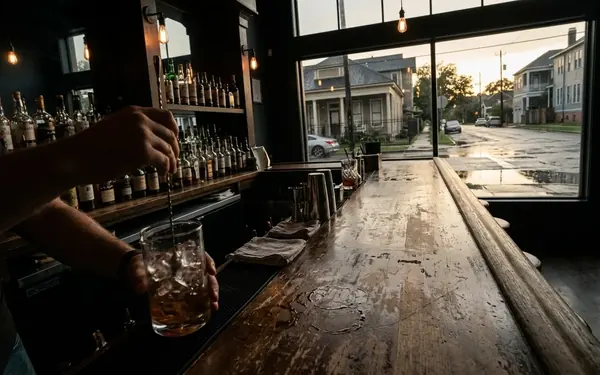
Lighting operates as the main tool of drama. The decision path is sequential. First, check whether the table light functions. A useful table-light target in a moody lounge is a readable menu at arm's length, roughly 16 to 24 inches from the guest's face, without requiring a phone flashlight.
Face light should be soft enough for intimacy but present enough that a guest across a two-top, typically 30 to 36 inches away, can read expressions without leaning forward. Backbar lighting can carry more brightness than table zones because bottles, glassware, and bartender movement are meant to act as the room's visual anchor.
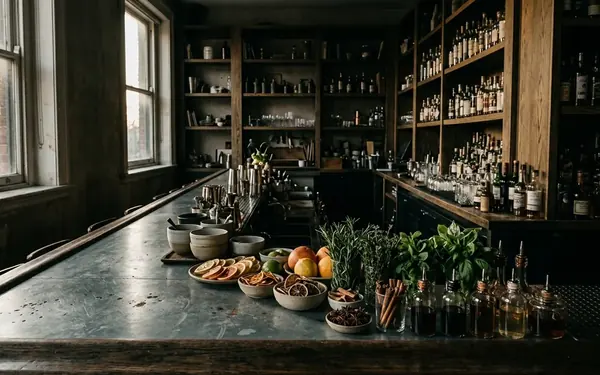
Sightlines matter just as much as illumination. Guests should catch glimpses of bottles, glassware, bartenders, and other tables without feeling exposed. Common failure points disrupt this balance quickly. Overhead downlights landing directly on foreheads, dead corners where glassware disappears, restrooms darker than the dining room, and candles placed too far from the menu to function all break the spell.
Sound, Seating, and the Feeling of Being Inside the Room
Music volume, room absorption, and crowd density shape whether a lounge feels cinematic or simply loud. A cinematic lounge can feel lively with music and crowd sound in the mid-to-high conversational range. The review test is simple. Two guests at a two-top should not need to repeat ordinary sentences more than once during the first drink. While this evaluation framework is built specifically for seated cocktail lounges and fine-dining bar rooms, rather than high-volume dance venues or patio-first beer programs, the principles of acoustic control remain highly transferable.
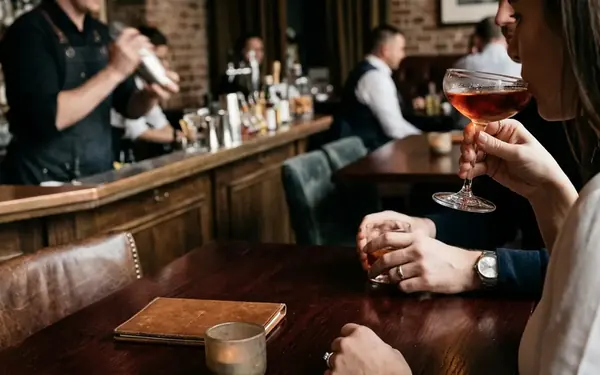
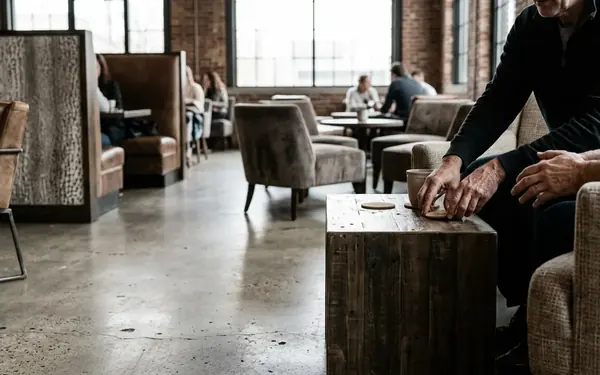
Seating dictates the level of privacy and exposure. Curved booths and banquettes create privacy when the seat back blocks cross-room sightlines. Bar seats create exposure because the guest is watching and being watched at the same time. Low lounge chairs can feel luxurious when paired with tables that meet the guest near elbow height. If the table sits too low, coupe glasses, small plates, and water glasses become awkward within the first 10 minutes.
Arrival energy sets the tone for the entire visit. A dramatic lounge should let guests feel the room immediately without forcing them into the center of attention. Materials such as velvet, leather, stone, brass, dark wood, mirror, and glass create depth when mixed with practical spacing, especially clear server paths of roughly 30 to 36 inches in busy lounge zones.
The Bar Should Feel Like a Stage, Not a Showroom
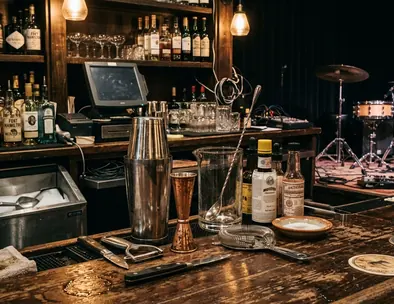
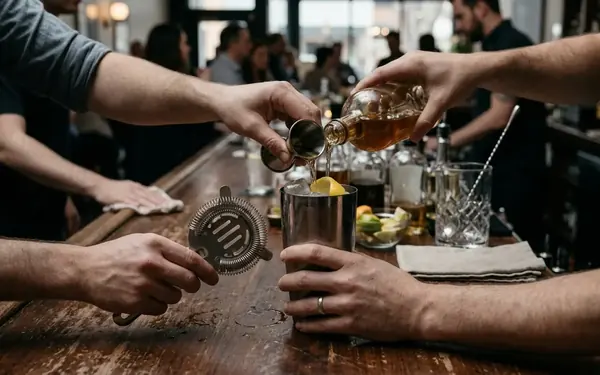
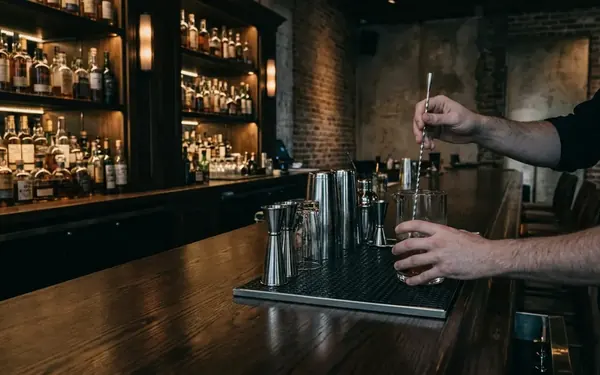
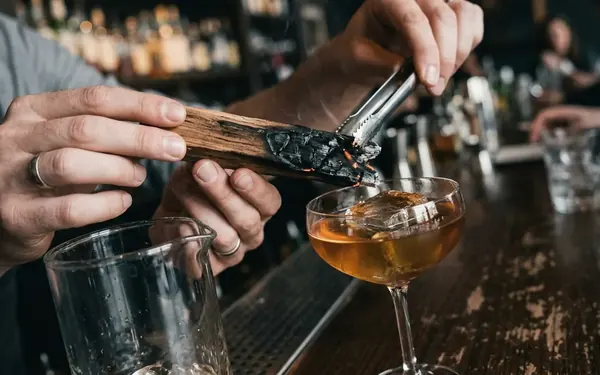
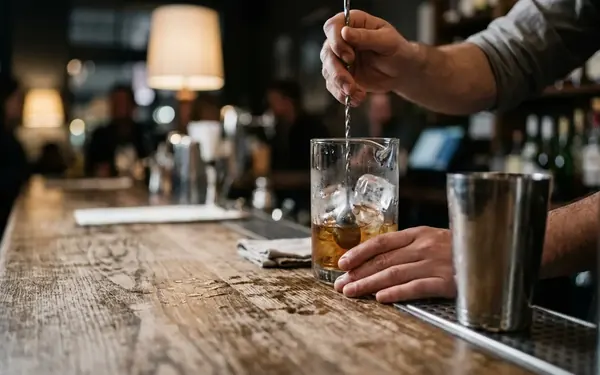
Bartender movement acts as a core part of the atmosphere. Shaking, stirring, glass chilling, garnish work, and bottle selection create visible rhythm. For stirred spirit-forward drinks, the visible rhythm often comes from chilling the glass, controlled stirring, straining, and garnish expression. The drama must preserve a cold first sip—a fundamental requirement that theatricality should never override.
For shaken citrus drinks, the review should watch whether foam, ice texture, rim cleanliness, and garnish placement survive the trip from well to guest. Dramatic drink presentation should heighten anticipation without slowing service or making the guest feel like a prop.
Smoke, vapor, tableside pours, and aromatic garnishes are strongest when the drink reaches the guest within 60 to 120 seconds of the final flourish. Glassware temperature provides an immediate tell. A chilled coupe, Nick and Nora, or rocks glass should feel distinctly cool on contact. If it reaches room temperature before the drink is placed, the presentation has started to cost the cocktail.
How to Judge Whether the Drama Actually Works
A concise review framework prevents drama from collapsing into personal taste. Ask whether the room builds anticipation, supports conversation, flatters the drinks, and remains comfortable after the first impression. A strong review visit should include one full drink cycle, from seating to menu reading to order taking to delivery to the last 3 or 4 sips, because the room's comfort often changes as the glass empties.
Quick Tip: Judge the room again 25 to 40 minutes after arrival, when novelty has softened and practical details such as chair comfort, music volume, table light, and server pacing become clearer. Sit once at the bar and once at a table if possible, because the room's drama often changes by vantage point.
In practice: Drama is successful when guests feel transported but still cared for.
To build a lounge that commands attention night after night, strip away the theatrical gimmicks and engineer the room entirely around the guest's physical comfort. Prioritize flawless acoustic dampening and precise, localized table lighting over expensive wall finishes or elaborate tableside smoke routines. A truly dramatic room does not demand the guest's attention; it quietly directs their focus toward the glass in front of them and the person sitting across the table.
Your Thoughts
No comments so far.
Add Your Thoughts