
Great Cocktail Ice Is Designed for the Last Sip
The useful way to judge cocktail ice is backward from the final sip. Decide where the drink should finish, then choose the ice that guides it there.
A bracing highball should retain its lift and cold snap. An Old Fashioned can soften gradually while preserving body, orange aroma, and the structure of its base spirit. A cobbler or swizzle may evolve into a lighter refresher as crushed ice settles. Each drink follows a different service timeline, so the clearest or largest cube cannot serve as a universal standard.
I assess a rocks drink when it reaches the table, then again at 5 and 10 minutes. For a tall patio drink, I add a 15-minute check. Those readings reveal more than a photograph of pristine ice ever could.
Judge the finish: Choose ice for the temperature, texture, and strength the guest should encounter near the end of the drink.
Ice acts as an ingredient throughout that timeline. It contributes water while changing aroma, sweetness, bitterness, texture, and perceived alcohol intensity. The recipe, starting temperature, glass, service pace, and surrounding environment all influence those changes.
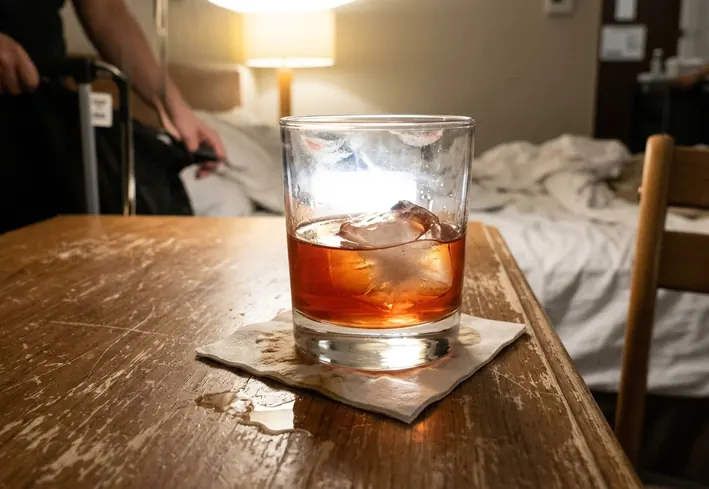
A drink may leave the bar properly chilled and still absorb heat from a room-temperature glass, a warm garnish, the air, and the guest’s hand. In Houston bar culture, the contrast between an air-conditioned dining room and a warm patio makes this especially visible. The same cube enters two very different thermal settings.
What Happens When Ice Meets a Warm Cocktail
Cooling and dilution move together
Heat flows from the warmer cocktail, glass, and surrounding air into the colder ice. The ice absorbs that energy as it warms and melts. Meltwater then enters the cocktail, lowering alcohol intensity and altering its balance.
Dilution is therefore part of the cooling mechanism rather than an accidental leak from the cube. A cocktail that receives too little water during mixing may taste hot and disconnected. A large service cube does not correct that insufficient mixing dilution; it can leave the opening sip forceful before later meltwater brings the drink into balance.
Several variables are at work:
- Ice mass: the total amount of cold material available to absorb heat.
- Surface area: the amount of ice directly exposed to liquid.
- Freezer temperature: ice hovering around -18 degrees Celsius has cooling capacity before reaching its melting point.
- Surface meltwater: wet, tempered ice begins adding liquid water sooner.
- Ingredient and glass temperature: warmer materials place a larger heat load on the ice.
- Agitation: shaking and stirring renew contact between liquid and ice.
- Time: the drink keeps exchanging heat after service.
A simple temperature comparison
For a controlled comparison, keep the recipe and glass constant. Chill one ingredient set for 2 to 4 hours and leave another at 21 to 24 degrees Celsius. Mix both in the same manner and taste immediately.
The warmer set may move from forceful in the first minute to colder and more integrated after several minutes. By the 10- to 15-minute mark, substantial surface water or a warming glass can push the drink toward thinness. The chilled set asks less of the ice at the start, which changes both its cooling path and the rate at which water enters the drink.
Why Surface Area Matters More Than Cube Prestige
Shape becomes useful once the mixing phase and drinking phase are considered separately. Small cubes move readily through liquid during shaking or stirring, creating abundant contact. An undisturbed service cube receives far less agitation, even when the visible ice load appears similar.
Crushed ice for rapid change
Crushed and pebble-style ice provide extensive exposed surface area and pack closely around a drink. They suit swizzles, cobblers, julep-style cocktails, and other long, refreshing serves that rely on rapid cooling and continuing dilution.
For those presentations, the ice can be packed from the liquid line to 2 to 3 centimeters above the rim. Settling during the first several minutes is expected. That movement belongs to the serve: the mound contracts, the drink lightens, and the cold vessel becomes part of the sensory experience.
Large formats for slower service
A dense cube or sphere can moderate in-glass dilution in a spirit-forward drink because it exposes less surface relative to its volume than many small pieces. Performance still depends on total mass, starting temperature, surface water, and fit within the glass.
A flawless clear cube can perform poorly when it has warmed during extended tempering, carries rinse water, is undersized for the pour, or lands in a room-temperature glass.
Spears answer a different need. In a highball, a spear can support sustained chill while preserving room for carbonation. It should leave a practical pouring channel and garnish space instead of wedging tightly against every wall. When the fit is poor, stacked cold cubes offer a sound alternative.
What Clear Ice Does and Does Not Change
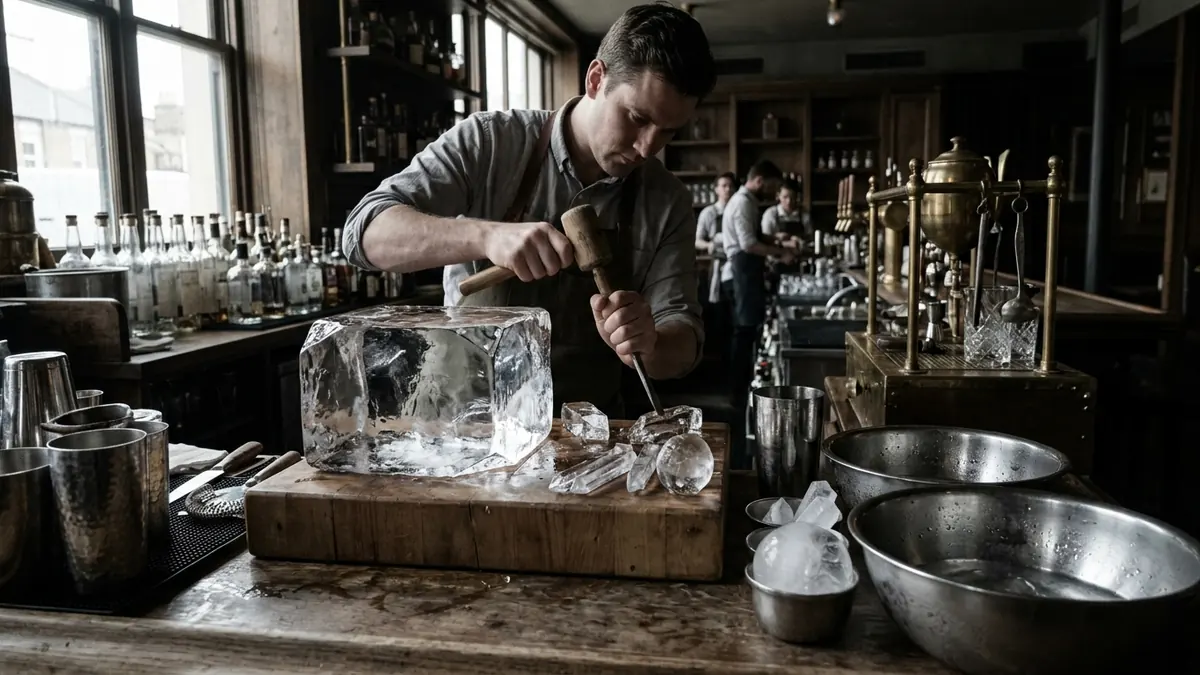
Directional freezing encourages a block to freeze progressively, pushing cloudiness and trapped material toward one area. The clearer section can then be separated, cut, refrozen, stored, and briefly tempered before service to reduce immediate surface cracking.
The practical appeal is substantial. Clear ice gives craft cocktails a polished presentation, makes consistent cutting easier, reduces visible fractures, and keeps the view of the drink and garnish unobstructed. These qualities matter in a lounge atmosphere where glassware and visual composition frame the first impression.
Clarity alone does not establish slower melting. A useful comparison must hold size, mass, shape, starting temperature, and handling constant. Otherwise, the test confuses appearance with thermal performance.
Clarity Has Limits: Evaluate geometry and presentation separately from cooling and dilution.
Production also requires practical discipline. A freezing cycle is commonly in the ballpark of 24 to 48 hours depending on block size and equipment. Freezer volume, cutting loss, covered storage, and handling time belong in the plan. Home directional-freezing results can shift with freezer cycling, insulation, block depth, dissolved material, and the point at which freezing stops.
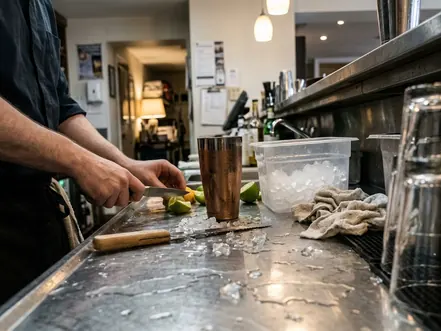
Water must be potable. Saws, knives, trays, towels, containers, and storage bins should receive the same care as other food-contact tools, regardless of how transparent the finished block appears.
Match the Ice to the Drink and the Houston Service
Start with the drink family, then model its route from mixing vessel to final sip. This produces a more reliable choice than ranking ice formats by perceived luxury.
Spirit-forward rocks drinks
Use a dense cube or sphere as a starting point for an Old Fashioned and similar slow-sipped cocktails. Complete the intended dilution during stirring before straining over the service ice. The cube then manages the drink’s continuing exposure to heat rather than finishing an incomplete mixing process.
Carbonated highballs
Choose a long spear or stacked cold cubes that fit the glass without crowding the pour. The arrangement should sustain chill, allow space for bubbles, and leave room for the garnish. A tight spear that blocks pouring or displaces too much liquid works against the structure of the serve.
Crushed-ice refreshments
Use crushed or pebble-style ice when rapid cooling, generous contact, and gradual lightening support the drink. Swizzles, cobblers, and julep-style serves benefit from that evolution, particularly when the presentation begins with a well-packed crown of ice.
Test each choice under the conditions in which guests will actually drink it. For an indoor dining-room trial, taste at service, 5 minutes, and 10 minutes. For a Houston patio simulation at 29 to 34 degrees Celsius, add a 15-minute reading and record direct sun, shade, and wind separately.
The same Old Fashioned may remain structured for 10 minutes in a chilled indoor rocks glass yet soften earlier on that patio because the glass, air, garnish, and handling add heat. Use the actual glassware and freezer for trials. Repeat the pour at least twice before changing one factor, such as cube size, ingredient temperature, or service delay.
Run a Repeatable Old Fashioned Ice Test
This test turns dilution theory into a sequence that a home bar or Houston cocktail program can repeat. Use the same spirit, glassware, ice source, and measuring tools for the baseline.
Build the baseline
- 2 ounces bourbon or rye
- 1 teaspoon rich demerara syrup
- 2 dashes aromatic bitters
- Standard mixing ice
- 1 large service cube
- 1 chilled rocks glass
- 1 orange peel
- Place the large cube in the chilled rocks glass. Measure the bourbon or rye, rich demerara syrup, and bitters into a mixing glass.
- Add enough mixing ice to surround the liquid. Stir for 20 seconds, using that duration as a repeatable starting benchmark rather than a universal target.
- Strain the cocktail over the large cube. Express the orange peel over the surface, then place it as the garnish.
- Taste immediately. Record alcohol intensity, sweetness, orange aroma, body, and any visible cracking or rounding of the cube. Add the measured temperature when a clean instant-read probe is available.
- Repeat the same observations at 5 minutes and 10 minutes without stirring or moving the glass unnecessarily.
Change one variable
If the immediate sip feels warm and sharp, run the next trial with a 25-second stir while leaving every other element unchanged. Alternatively, prechill the ingredients for 2 to 4 hours and retain the original 20-second stir. Test those adjustments separately so the cause remains visible.
If the first sip is already muted, shorten the next stir by 3 to 5 seconds. If the drink starts balanced and becomes thin by 10 minutes, keep the 20-second mixing benchmark and test a larger or colder service cube.
For the final comparison, make the baseline recipe once more with the 20-second stir. Replace the large cube with smaller cubes of comparable total mass, strain, garnish with the same orange peel, and log the drink at 0, 5, and 10 minutes. Set the two records side by side and choose the ice that preserves orange aroma, body, and integrated alcohol through the final reading.


Your Thoughts
No comments so far.
Add Your Thoughts