
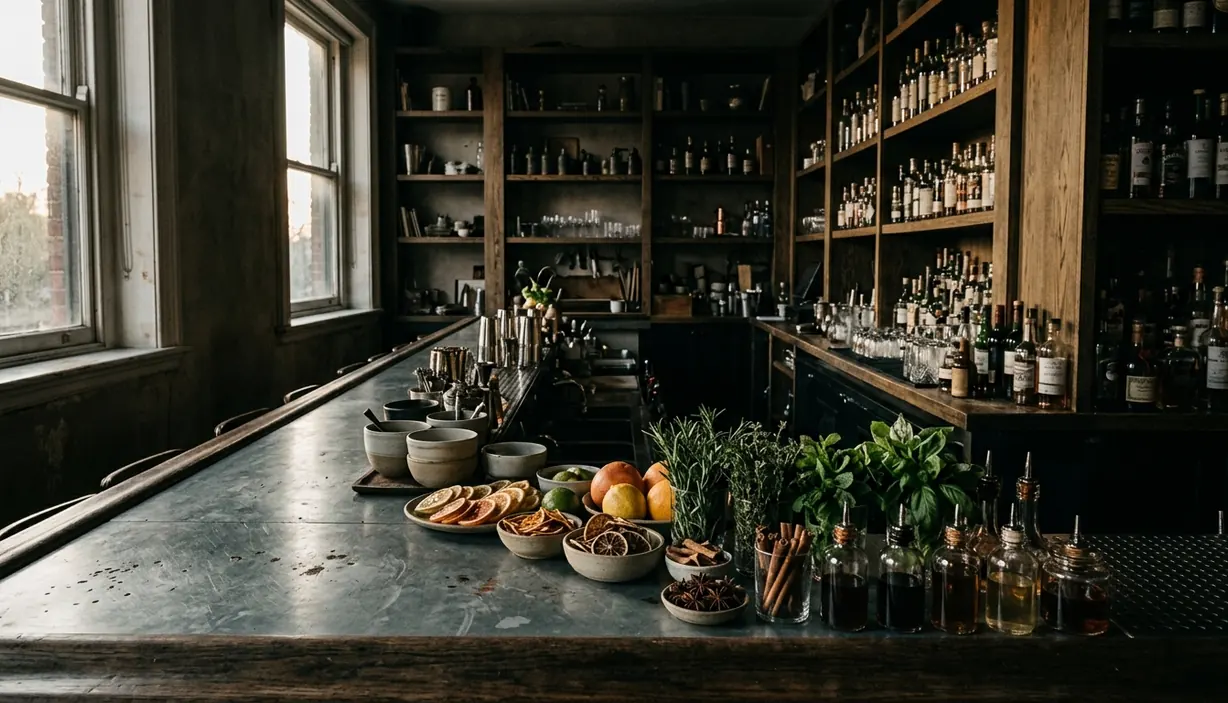
What a Cocktail Garnish Must Do Beyond Looking Polished
“What should a garnish contribute before it ever touches the glass?”
It shifts attention away from decorative citrus wedges, oversized herb bouquets, and floating flowers that photograph well yet contribute little to the drink. Before cutting, clipping, or torching anything, name the experience the guest should have.
A garnish can perform five useful jobs:
- Release aroma as the glass approaches the face or reaches the lips.
- Reinforce or contrast flavor already present in the recipe.
- Introduce texture through an intentional edible element.
- Influence perceived temperature with a fresh, cooling, or warm aromatic cue.
- Frame the drink visually so its character reads before the first sip.
Give the garnish one primary sensory job and, at most, one secondary job. Asking it to do more makes placement muddy and evaluation harder. A clipped herb may provide aroma and a visual line. Add smoke, flowers, a citrus wheel, and a textured rim, and the guest has to navigate the arrangement before reaching the cocktail.
Assign the Job
Write the intended effect in one sentence before preparing the garnish. “Orange oil should register at the rim before the first sip” is specific enough to test during service.
Appearance still matters in craft cocktails, especially within a composed lounge atmosphere. Yet the final test happens in the guest’s hand. A garnish must survive pickup, travel, and drinking while continuing to perform its assigned job.
How Aroma Reaches the Guest Before the First Sip
Placement determines when an aroma appears. A citrus peel expressed over the rim may register as the glass approaches and return when the guest drinks. An herb beside a tall glass becomes more apparent as the glass tilts. A floating flower stays near the nose, though it also touches the liquid and may move toward the lips.
I assess that sequence at three points: with the glass 15–20 cm from the face, at the rim immediately before sipping, and after 3–5 minutes of dilution. This approach-rim-dilution check reveals whether an aroma arrives at the intended moment or fades before the drink settles at the table.
Fresh citrus works through its fragrant surface oils. Expressing a sound piece of peel disperses those oils over the chosen area. Gentle heat can make rosemary, thyme, or cinnamon smell more immediate, but heat also raises the risk of smoke, ash, and an aroma that overwhelms the base drink.
A tall carbonated cocktail deserves another comparison. Smell it immediately after pouring and again at 4 minutes, first with the garnish beside the rim and then with the same garnish lower on the glass. The upper placement often creates a more direct encounter because it follows the guest’s route to the drink.
Placement findings belong to the tested glass, ice format, serving temperature, carbonation, and base spirit. Change one of those conditions and the same garnish may behave differently.
Read the Drink Before Choosing the Garnish
Start with the complete recipe. Classify the cocktail as spirit-forward, sour, sparkling, tall and refreshing, creamy, savory, or dessert-led. Then decide how the garnish should relate to that structure.
Reinforcement repeats a note that already anchors the drink. Contrast introduces a controlled counterpoint. Bridging connects ingredients that otherwise seem separate. Orange oil reinforcing a stirred whiskey drink offers a clear example: the aroma supports the drink’s warm citrus and barrel direction without altering its core proportions.
Cocktail Structure and Garnish Decision Matrix
| Cocktail structure | Intended sensory cue | Candidate garnish | Placement | Likely failure mode |
|---|---|---|---|---|
| Spirit-forward | Reinforce warm citrus or barrel notes | Fresh orange peel | Express over the surface or rim | Peel obstructs the sip |
| Sour | Add a controlled citrus counterpoint | Fresh grapefruit peel | Express above the drink | Aroma dominates the first sip |
| Sparkling | Keep the aromatic lift near the nose | Clipped culinary flower | Beside the rim | Flower shifts or wilts |
| Tall and refreshing | Extend a fresh herbal note | Sturdy culinary herb | Alongside the upper glass | Herb sits too low to register |
| Creamy | Introduce a warm aromatic cue | Cinnamon | Near the rim without loose debris | Powder or ash reaches the drink |
| Savory | Bridge herbal ingredients | Thyme | Clipped securely beside the glass | Loose leaves enter the liquid |
| Dessert-led | Add delicate aroma and a focal point | Culinary flower | Skewered or served as a sidecar | The element crowds the rim |
Review four service variables before approval: the full recipe, glass shape, ice format, and expected drinking pace. Compare no more than three garnish candidates in one tasting round. Keep the recipe, dilution, glass, and ice unchanged so the garnish remains the only meaningful variable.
Build Aroma with Citrus Oils, Heat, and Mists
Citrus expression rewards precision. Cut a fresh peel with an intact colored surface and minimal white pith. A useful working piece measures approximately 5–7 cm long and 2–3 cm wide. It should flex without tearing and provide enough surface to express cleanly.
- Hold the peel with its colored surface facing the intended target.
- Express it over the drink’s center or 2–3 cm above the rim.
- Smell the result at approach distance and at the first sip.
- Decide whether the peel belongs in the drink, on the glass, or outside it.
Each choice produces a different experience. Oil expressed across the surface creates an immediate aromatic layer. Scenting the rim places the cue directly along the drinking path. Discarding the peel after expression preserves the initial oil while keeping the glass clear. Leaving it in extends visual presence and contact, though it may eventually become an obstacle.
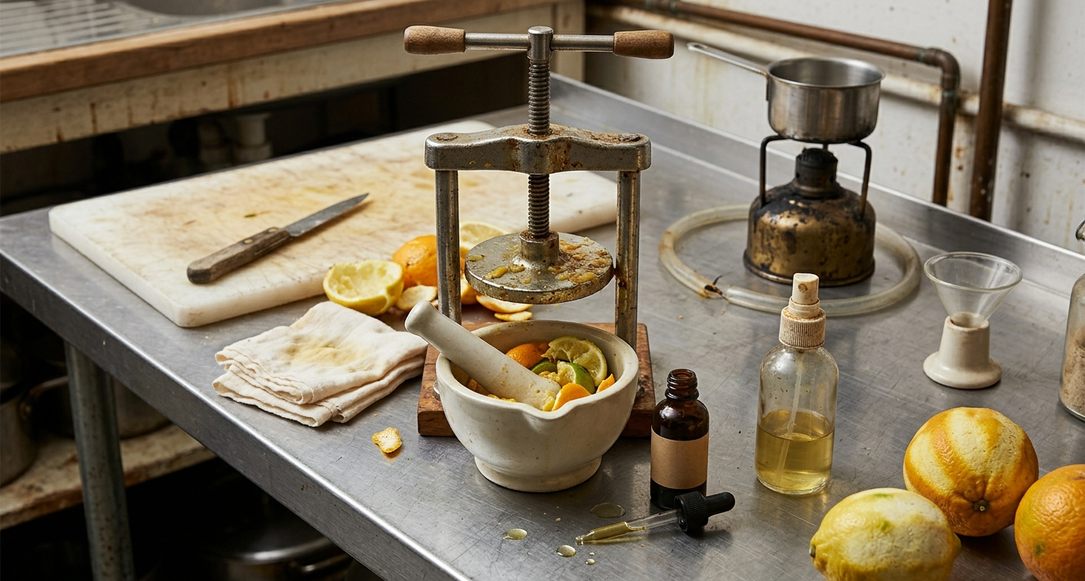
A culinary mist needs similar restraint. Test one spray from 20–30 cm away, and smell the glass before filling it. After service, take two normal sips. Reject the application if the mist still controls the drink at that point.
Heat Herbs Away from the Glass
Choose a sturdy culinary herb for warming. Apply heat away from the completed cocktail and away from the guest, then extinguish the herb fully. Inspect it for at least 10 seconds before it approaches the drink. No glowing material or loose ash should remain.
Keep Ash Out
Heat should make the herb more immediate, not leave smoke hanging over the table or debris on the cocktail’s surface.
This technique suits bar programs that can control timing and station setup. During a busy pickup, an aromatic effect that requires repeated relighting quickly loses its grace.
Use Edible Flowers and Texture Without Crowding the Glass
Begin with positive identification and culinary-use sourcing. Decorative florist blooms do not belong in drinks. Inspect each culinary flower immediately before service for wilting, damaged petals, insects, loose debris, and secure placement; clean tweezers give better control over small pieces.
Color comes after purpose. An edible flower may contribute delicate aroma, subtle flavor, an intentional bite, or a visual focal point. Its placement determines how closely the guest interacts with it.
- Floating creates direct contact with the liquid and keeps the flower near the nose, but it can drift into the drinking path.
- Clipped keeps the bloom close to the rim while limiting contact with the cocktail.
- Skewered controls position and makes removal straightforward.
- Sidecar placement allows the guest to choose whether the flower enters the drink.
Run a comfort check with three ordinary sips taken from different points on the rim. Let the drink rest for 5 minutes, then inspect whether a floating or clipped element has shifted. The test should feel ordinary because guests rarely approach a glass with the caution used during recipe development.
Texture demands the same discipline. A dehydrated element may begin crisp and soften as it absorbs moisture. If the intended bite disappears before the drink reaches the table, the garnish has become decoration with poor timing.
Test the Garnish for Houston Bar Service
Houston bar culture places drinks in sharply different conditions. A composed indoor lounge and a warm patio can sit within the same service route, yet airflow, temperature, and humidity change how herbs, flowers, smoke, and dehydrated garnishes behave.
Prepare the complete cocktail exactly as it will leave the bar. Inspect it at 0, 3, and 8 minutes, photographing the garnish from the same angle each time. Record aroma, obstruction, softening, staining, and debris. Notice whether herbs wilt, flowers migrate, citrus oil marks the glass, or smoke outlasts the intended first impression.
Carry It Like a Server
Move the finished drink over a 10–15 m service route that includes one turn and one table set-down. Then take an unobstructed normal sip. This glass-travel boundary matters because a garnish is only service-ready after it survives movement as well as tasting.
Repeat the trial indoors and on a patio during the same service period. Keeping the timing close makes the comparison useful. A clipped flower may remain stable in the dining room and loosen outside; a fragrant herb may project clearly indoors yet disperse quickly in moving air.
Station design supports the result. Keep fresh citrus, protected herbs, culinary flowers, clean tweezers, a labeled culinary atomizer, sharp cutting tools, and covered ingredient-specific storage within a deliberate workflow. Then time garnish assembly across five consecutive drinks during a mock pickup, recording application time, placement differences, and any remake.
The aim is repeatable hospitality. A garnish that works only when one careful bartender has unlimited time does little for a full dining room, a paced tasting menu, or a busy event service.
Let One Sensory Cue Earn Its Place
The final edit has three parts. State the intended cue in one sentence. Confirm that the guest can perceive it at the appropriate moment. Remove every element that contributes clutter without supporting that cue.
Approve the garnish only after it remains perceptible and physically stable through the 8-minute service test. This standard treats restraint as hospitality rather than a visual preference. Guests should be able to lift, smell, and sip the cocktail comfortably, without negotiating a bouquet or moving a soaked garnish away from the rim.
A bare glass can express confidence when the recipe already carries its aroma and visual character. Extra decoration cannot rescue a garnish that fades during dilution, stains the bowl, blocks the sip, or arrives at the wrong moment.
Choose one garnish that creates one intentional sensory cue; if it cannot do that cleanly through service, leave the glass bare.



Your Thoughts
No comments so far.
Add Your Thoughts