
Cocktail glassware is the vessel chosen to present a finished drink: its bowl shape, rim width, stem, base, and actual capacity determine how a guest lifts the glass, where the nose sits above the liquid, and how the first sip arrives. The drink is already built by the time this decision matters, which is precisely why it gets rushed.
Glassware as the Final Decision in a Drink's Build
A problem shows up constantly behind a busy bar. A cocktail is stirred to the right chill and dilution, strained cleanly, garnished with care, and then poured into whatever vessel sits closest on the rail. Within roughly ninety seconds the drink has warmed past its intended window, a cherry blocks the drinking edge, or the server sets a brimming bowl down with a visible wobble. The build was sound. The serve failed.
Useful glass selection starts with the finished drink rather than its name. A cocktail strained without ice and a cocktail built around a single large cube ask for different openings, different grips, and different clearance above the liquid. Two drinks sharing a recipe family can require different vessels once ice enters the equation.
Two checks resolve most of these situations before service. First, look at the space left above the liquid after pouring: a garnish and a walk from bar to table both become awkward when the drink reaches the rim. Second, for any iced serve, place the intended cube into the empty glass and confirm it sits comfortably before committing to that vessel.
No cocktail has one correct glass. The choice is a service judgment that accounts for ice, pour volume, garnish, carry distance, and the way the drink will be held.
Rim Width, Bowl Shape, Stem, and Base: What Each One Does in the Hand
Glassware features are easiest to compare by asking what a guest actually encounters. Three contact points matter: the opening where the nose arrives, the surface where fingers rest, and the footprint where the glass meets the table.
The opening and the aroma it presents
A narrower rim gathers the drink's aromatics into a tighter column above the liquid; a wider rim spreads that column and places the nose further from the surface. The honest claim here is about presentation rather than perception. Rim geometry changes how aroma is offered to a guest. What any individual guest registers depends on the spirit, the dilution, the garnish oils, and how promptly the drink is tasted.
The stem and the base
A stem gives the guest a grip below the bowl, which keeps a warm palm off a chilled serve. That is a handling benefit, and it has limits. A stem does not replace prechilling the glass, and it does not compensate for a drink that sits on a pass for about four minutes.
Weight works the same way. A heavy base makes a short glass feel planted on a lounge table and comfortable to pick up one-handed. Mass has no bearing on the temperature of the liquid inside.
What the Stem Does
Treat the stem as ergonomics and the chill as timing. Prechill the glass, serve promptly, and the stem keeps hands away from the bowl during the sip.
Coupe, Nick and Nora, Double Rocks: The Same Pour in Three Vessels
The clearest way to understand these three shapes is to imagine one identical finished pour entering each of them.
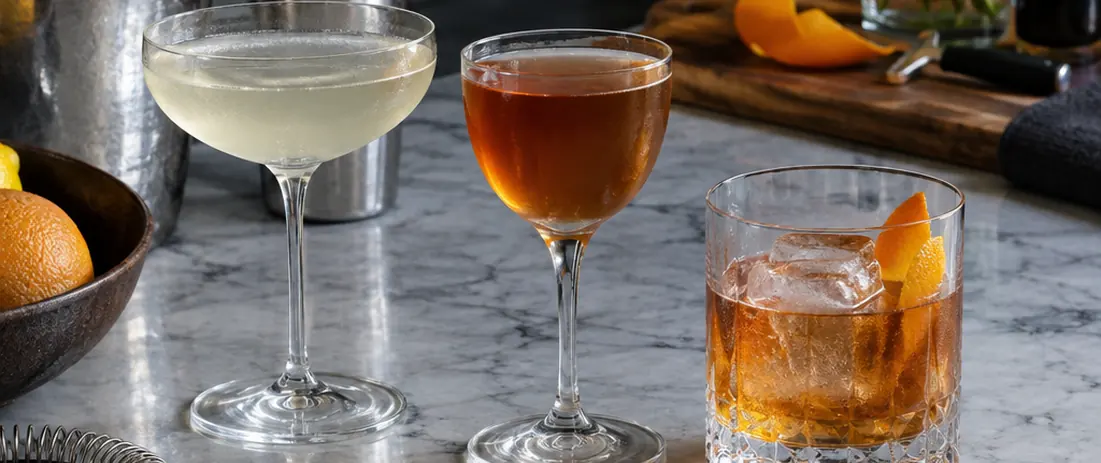
Coupe: open bowl, exposed surface
The coupe's broad, shallow bowl gives an up drink a generous, open presentation and plenty of room above the liquid for a perched citrus twist or a floating garnish. The same width is the trade-off. A wide surface is easier to disturb during a carry, and a coupe filled too near the rim will slosh on a turn between tables. Leave visible space between the drink and the rim before the garnish goes on.
Nick and Nora: a contained up serve
The Nick and Nora holds a smaller, more enclosed bowl on a stem, with a rim that curves inward. For a compact, spirit-forward pour served without ice, that shape keeps the liquid lower in the bowl and gathers aromatics closer to the opening. It also carries more securely than a coupe of equivalent volume, which matters across a dining room.
Double rocks: building around the ice
A double rocks glass exists to accommodate ice that stays in the drink. Its height and width leave the drinking edge accessible, so a guest can approach the rim without a cube pressing against the lip. The wide opening presents aroma differently from stemware: the nose sits further above a broader surface, and the drink reads as a slower, more deliberate pour. The working sequence is ice first, then the pour, then a clearance check at the rim.
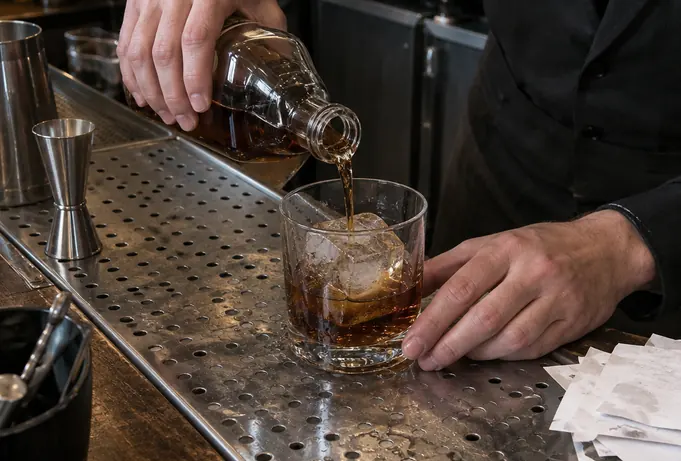
Capacity Varies by Vessel
Glass names describe shape, not volume. Two coupes from different suppliers can differ substantially in capacity. Check the actual vessel in hand against the finished pour rather than trusting the label on the box.
A Three-Step Selection Order for Any Build
Appearance tends to dominate glass selection, which is how a beautiful vessel ends up producing an uncomfortable serve. A fixed decision order prevents that.
- Determine whether ice remains in the served drink. This single question splits the entire glassware cabinet into stemware for up serves and rocks glassware for iced serves.
- Fit the pour and the garnish. Pour volume plus garnish must leave usable clearance below the rim.
- Refine for handling and aroma. Only now compare how the glass carries, where the fingers land, and how the opening presents the drink's aromatics.
Applying the order to a shaken up drink
For a shaken cocktail strained without ice, both stemmed options work, and the pour decides between them. A larger pour with a showy garnish reads well in a coupe, where the open bowl has room to display it. A smaller, more concentrated pour sits better in a Nick and Nora, where the liquid fills the bowl properly and the contained rim keeps the sip tidy.
An optional preparation step: fill the chosen glass with ice and water for two to three minutes while mixing, then empty and dry it before straining.
Applying the order to a stirred iced drink
For a stirred drink served over ice, put the intended cube into the double rocks glass before checking pour clearance. A cube that fits through the opening may still sit too high for a comfortable sip once the liquid goes in. Testing the ice first costs seconds and settles the vessel question before anything is wasted.
Order of Decisions
Ice, then fit, then feel. Reverse that order and the glass dictates the drink.
Carrying the Drink Across a Houston Lounge Floor
Glassware decisions change character once a Houston cocktail lounge is full. The route from the bar to a banquette involves corners, a crowded service aisle, and a tabletop already holding a water glass, a small plate, and someone's phone. A coupe that looked composed on the rail becomes a liability on that walk.
Service checks worth running before the drink leaves the bar:
- Look across the rim at eye level for protruding ice or a garnish that overhangs the drinking edge.
- Wipe any drip from the outside of the glass, including the underside of the foot on stemware.
- For a stemmed serve, consider the tabletop space available and whether the guest has a clear place to grasp the stem without knocking a neighboring glass.
- Confirm the glass can be carried level, set down securely, and picked up without dislodging the garnish.
A boundary case clarifies the priority: a cherry that crowds a Manhattan's drinking edge is a service problem even when the glass comfortably holds the liquid. Volume fit and sip comfort are separate tests. Visual appeal breaks the tie after both pass.
These are practical floor judgments rather than formal test results. A bartender who has carried stemware through a full Houston evening, from the first stirred drink before the dining room fills to the last call order, understands these priorities firsthand. The checks reflect repeated service observation and everyday use.
Glassing an Up Manhattan, Stir to Table
Here is the full sequence for a single drink, copyable as written.
The guest orders a Manhattan with no further specification. Decide first that it will be served up, chilled and without ice, because that decision determines the vessel and allows the glass to be chilled while the drink is made. Select a clean Nick and Nora: the compact finished pour fills its bowl properly, and the stem gives the server something to hold on the way to the table.
- Fill the Nick and Nora with ice and water and set it aside.
- Build in a mixing glass: 2 oz whiskey, 1 oz sweet vermouth, 2 dashes aromatic bitters.
- Add ice and stir until the drink reaches the intended chill and dilution.
- Empty the glass, dry it, and strain the Manhattan in.
- Place a cherry so it rests clear of the opening rather than across the drinking edge.
- Check the rim and the exterior for drips, then carry the glass by its stem.
If the guest asks for it over ice instead, the vessel decision moves ahead of the mixing. Choose a double rocks glass, seat the intended ice in it, confirm there is room for both the pour and the cherry below the rim, and only then begin to stir.



Your Thoughts
No comments so far.
Add Your Thoughts