
Contents
- What Does Stirred vs. Shaken Actually Mean?
- The Four Things Technique Changes in the Glass
- Why the Ingredients Usually Decide the Method
- How Stirring Builds a Silky, Clear Cocktail
- How Shaking Adds Cold, Foam, and Momentum
- A Practical Decision Path for Home and Bar Service
- Common Mistakes That Change the Drink
- The Final Choice Is the Experience You Want to Serve
What Does Stirred vs. Shaken Actually Mean?
Stirring and shaking are two chilling, dilution, and texture-building methods used to finish a cocktail before service.
That sounds plain because it should. The choice happens late, after the drink has been measured and combined, often in the ballpark of the final 8 to 45 seconds before straining or serving. Those seconds decide whether a cocktail lands polished, sharp, cloudy, frothy, or flat.
I start with the finished glass, not the recipe card. A Martini asks for a different kind of calm than a Daiquiri. A Manhattan should not feel like a sour with the citrus removed. The same base spirit can move in either direction, but the intended texture tells the bartender which path to take.
Most classic builds enter the mixing glass or shaker at roughly 75 to 120 mL before dilution. At that scale, a little extra melted ice changes the drink in a real way. Heat softens, sweetness stretches, bitterness relaxes, and aroma either tightens into focus or lifts out of the glass.
Summary: Stirring and shaking are not decorative rituals. They are finishing decisions that shape temperature, dilution, clarity, aroma, and body.
The Four Things Technique Changes in the Glass
Technique changes four things a guest can notice without knowing the recipe: dilution, temperature, aeration, and clarity.
Dilution Is an Ingredient
Melting ice does not merely weaken a drink. It softens alcohol heat, carries aromatics, and lets bitter, sweet, sour, and spirit elements sit in proportion. A spirit-forward drink often needs a longer contact window with ice than a shaken sour, commonly around 20 to 35 seconds when dense freezer ice and a room-temperature mixing glass are in play.
That window is not a stopwatch command. It is a working check.
Temperature Gives the Drink Its Frame
Cold drinks feel tighter. They read brighter, cleaner, and more composed, especially when served up in a coupe or Nick & Nora. Once the drink leaves the ice, time begins working against texture. An up cocktail usually shows its intended form best in the first 5 to 8 minutes at a seated dining table.
Aeration Changes Weight
Shaking traps air. That matters when the drink contains citrus, egg white, cream, fruit, coffee foam, or another ingredient that benefits from lift. A shaken citrus drink can become service-cold quickly, often in 8 to 14 seconds with firm ice in metal tins.
Clarity is the visible signal. Clear drinks show flaws fast: trapped bubbles and ice chips can sit in the glass for 1 to 3 minutes after an over-aggressive shake. Under dining-room lighting, that first look matters.
Why the Ingredients Usually Decide the Method
The working rule in many cocktail bars is simple: spirit-only drinks, or drinks built with spirit plus vermouth, bitters, fortified wine, or liqueur, usually get stirred. Drinks with citrus, dairy, egg, fruit purée, coffee foam, or heavy modifiers usually get shaken.
It is a strong starting point, not a law. House style, ice quality, glass temperature, and guest preference can shift the choice. A bar using very dense freezer ice can shake longer than a station using smaller wet cubes without reaching the same dilution level.
Stirred Templates
- Martini: gin or vodka, vermouth, and a garnish that should not fight cloudy texture.
- Manhattan: whiskey, sweet vermouth, and bitters that need smooth dilution rather than air.
- Negroni: gin, bitter aperitif, and sweet vermouth, where clarity keeps the drink composed.
- Vieux Carré: a dense, spirit-led build that benefits from integration and a satin finish.
Shaken Templates
- Daiquiri: rum, lime, and sugar that need cold, acid-softening motion.
- Margarita: tequila, lime, and orange liqueur or sweetener that should feel bright rather than spiky.
- Whiskey Sour: whiskey, lemon, sweetener, and sometimes egg white, built for aerated body.
- Ramos-style drinks: citrus, cream, egg white, and carbonation-adjacent texture demands.
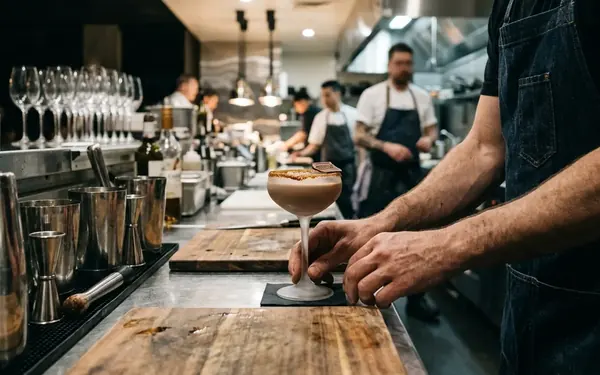
- Espresso Martini: coffee, spirit, sweetener, and foam that need a vigorous finish.
A citrus-forward shaken drink often carries 20 to 30 mL of fresh lime or lemon juice. If that acidity never chills, dilutes, and aerates with the rest of the drink, it can taste angular. Egg white or aquafaba builds commonly use 15 to 30 mL of foaming modifier; stirring will not build the same cap or integrated body.
How Stirring Builds a Silky, Clear Cocktail
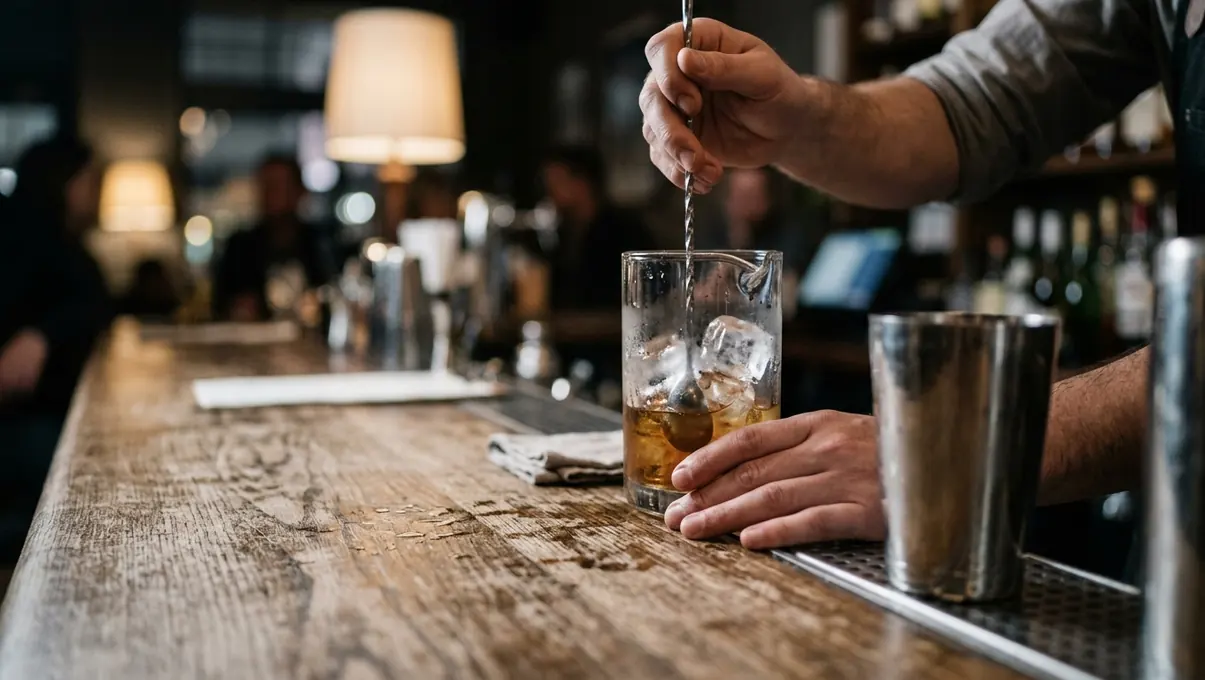
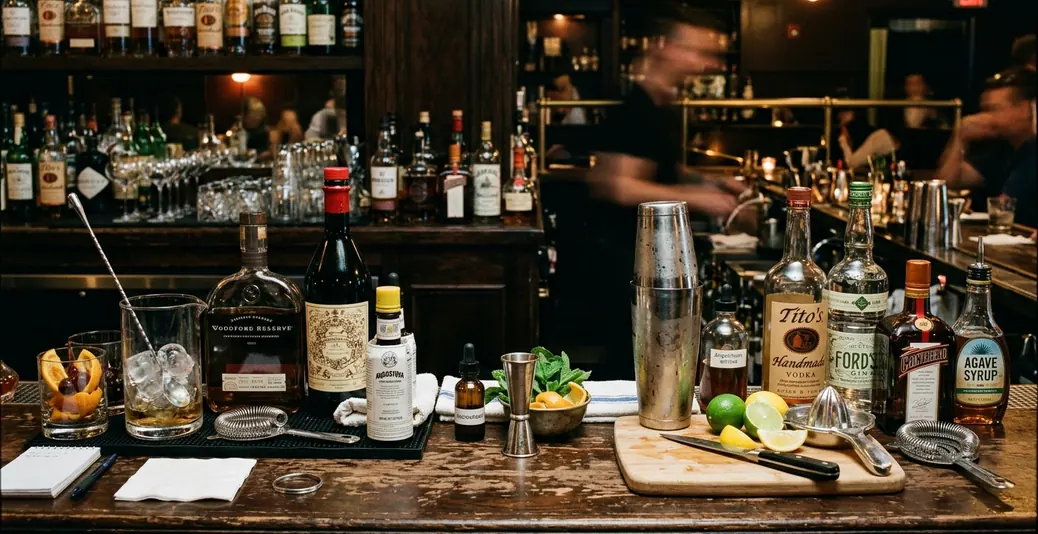
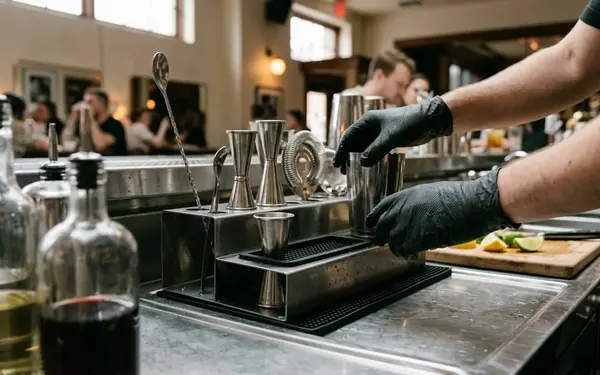
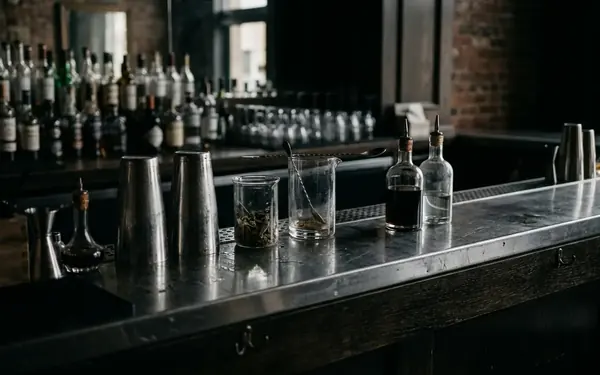
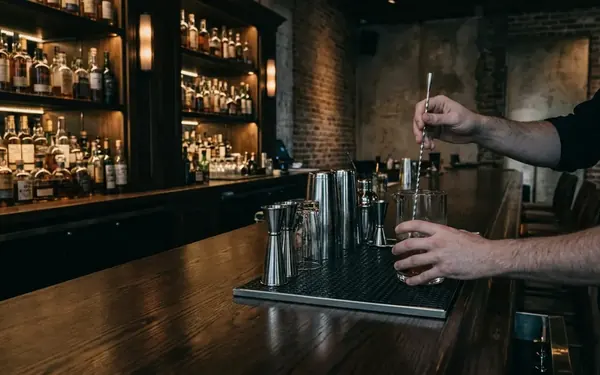
Stirring depends on calm control. Before ice enters the mixing glass, I want the station set: chilled mixing glass, dense ice, bar spoon, julep or Hawthorne strainer, and a pre-chilled coupe, Nick & Nora, or rocks glass.
Pre-chill the service glass for 10 to 20 minutes when freezer or ice-well space allows. This small preparation keeps the drink from warming at the rim before the guest takes the first sip.
The Motion
The spoon should move in a smooth circular path around the inside wall of the mixing glass. The goal is not to beat the drink into submission. The goal is to chill and dilute while minimizing air and preserving clarity.
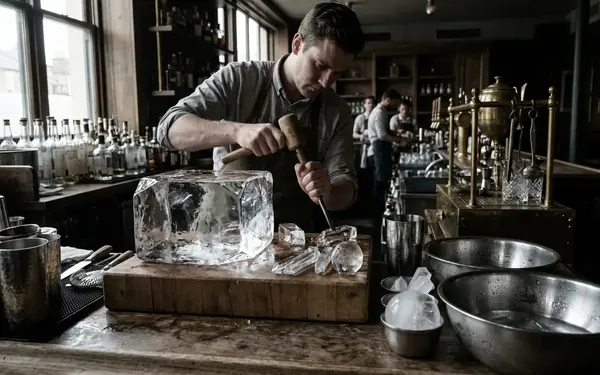
Dense cubes in the 25 to 40 mm range give more control than chipped or wet ice. They melt more slowly and let the bartender read the drink instead of chasing it.
The Endpoint
For a 90 to 120 mL spirit-forward build, a practical stirring check often falls between 20 and 45 seconds, depending on ice, glass temperature, and the desired dilution. The signs matter more than the count: the mixing glass begins to frost, the spoon glides with less resistance, and the aroma smells more joined than raw.
A clear Martini in a chilled coupe carries a kind of quiet pressure. If it looks hazy or smells hot, the technique has already spoken.
Quick Tip: Taste a stirred drink before straining when possible. The first warning sign is usually not weakness; it is alcohol heat sitting above the aromatics.
How Shaking Adds Cold, Foam, and Momentum
Shaking is a texture-building action, not a piece of theater.
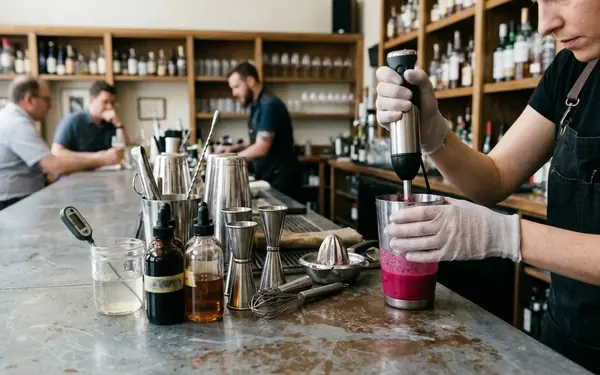
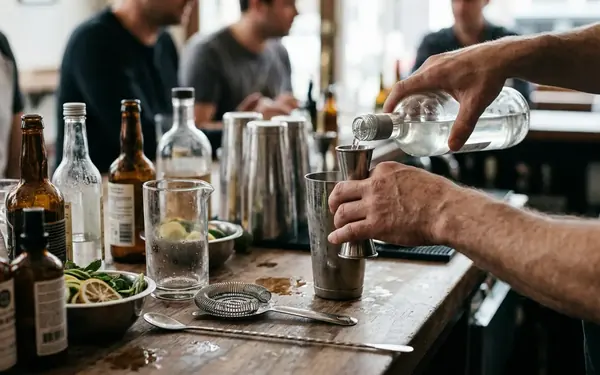
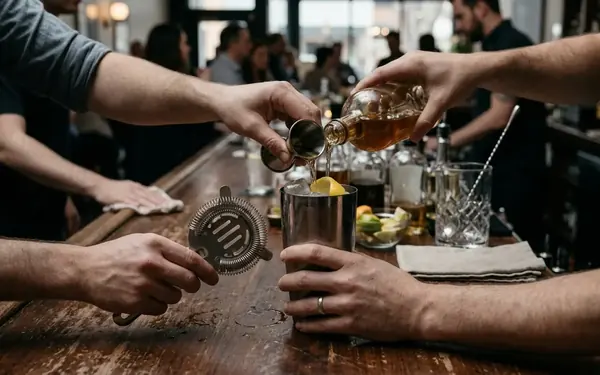
The setup is direct: Boston tins or a cobbler shaker, firm ice, a confident seal, and the right strainer for the drink. If citrus pulp, herb fragments, or small ice shards would distract from the texture, double-strain through a Hawthorne strainer and fine mesh.
What the Shake Contributes
Shaking delivers fast chilling, active dilution, aeration, foam, and a slightly more volatile aromatic release. The drink wakes up. That is why a Margarita stirred out of convenience may look calmer, but the lime, sweetener, and tequila can taste sharp and separated because the drink never received enough aeration or active dilution.
A hard shake for a Daiquiri, Margarita, or Whiskey Sour commonly lasts 8 to 12 seconds with firm ice in metal tins. The sound changes as the ice rounds off. The tins frost. The hands feel the temperature drop.
Different Shakes for Different Drinks
- Hard shake: Use it for citrus sours, Margaritas, and drinks that need quick cold and lively body.
- Controlled shake: Use it when delicate aromatics should remain lifted but not bruised by excess force.
- Dry shake or reverse dry shake: Use it for egg white or aquafaba cocktails when house practice calls for a built foam cap.
A dry shake for egg white or aquafaba often runs 10 to 20 seconds before ice is added. A reverse dry shake uses an iced shake first, then a shorter foam-building shake after straining off the ice.
One service note from busy lounge work: high-volume service may shorten or intensify the shake when tins, glassware, batched ingredients, and ice are already very cold.
A Practical Decision Path for Home and Bar Service
The fastest useful decision happens before the build. I use a short sequence that works at a home counter and behind a dining-room bar.
Stir-or-Shake Service Checklist
- Identify the base. Is the drink led by spirit, or does it depend on juice, dairy, fruit, coffee, or foam?
- Find opaque or acidic ingredients. Citrus, egg white, aquafaba, cream, and fruit purée point toward shaking.
- Decide whether clarity matters. If the drink should look transparent and polished, start with stirring.
- Match the mouthfeel. Choose satin and composed, or cold, bright, and aerated.
- Check the glassware and garnish. The serving vessel should support the texture, not fight it.
This pre-build decision can happen in 15 to 30 seconds: base spirit, modifier type, clarity target, glassware, garnish. That is enough time to prevent most technique errors.
Stirred equals transparent, composed, spirit-forward, and satin-textured. Shaken equals bright, cold, aerated, and lively.
Glassware Sends a Message
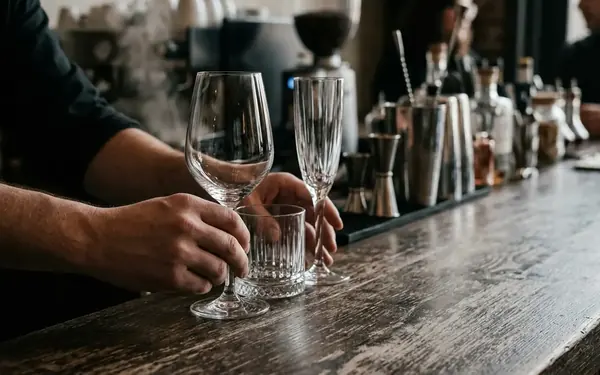
A crystal-clear Martini in a chilled coupe signals restraint. A frothy sour in a smaller stemmed glass signals lift and freshness. A smaller stemmed sour glass in the 120 to 180 mL range supports foam better than an oversized coupe that spreads the cap thin.
Rocks service changes the calculation after straining. A large rocks format with a single 50 to 60 mm cube keeps diluting at the table, so the drink should not leave the mixing vessel already thin.
Common Mistakes That Change the Drink
The mistakes matter because they damage the sensory promise of the cocktail.
Weak Ice
Small, wet, or melting ice can over-dilute before the drink is properly chilled. Ice that has been sitting wet in a tin or open well for 10 to 15 minutes can begin melting before the drink is fully built, narrowing the bartender’s control window.
The drink may taste watery and hot at the same time. That contradiction usually means the ice failed before the technique could do its work.
Stirring a Drink That Needs Force
Citrus and egg-white drinks can taste separated or heavy without aeration. A sour needs motion to bind acidity, sweetener, spirit, and foam into one texture. Stirring may chill the drink, but it will not give it lift.
Shaking a Drink That Needs Polish
A Martini shaken for theatrical effect may arrive cold but hazy, bubbly, and less polished, especially in a clear coupe under dining-room lighting. A shaken spirit-forward drink can hold a cloudy, bubbly look for 1 to 3 minutes, long enough to shape the guest’s first impression.
Note: Before service, check the glass temperature, aroma integration, surface texture, and first taste. The drink should feel cold without tasting thin, and aromatic without smelling alcoholic.
The Final Choice Is the Experience You Want to Serve
Technique should serve the drink’s intended clarity, temperature, body, and mood. Stirred and shaken are both correct when chosen deliberately.
The final strain-to-serve window for up drinks should stay tight, often 30 to 90 seconds, because texture and temperature change quickly once the cocktail leaves the ice. For shaken drinks with foam, the best visual presentation usually happens immediately after straining, before the cap begins to separate or collapse over the next several minutes.
I ask the service question before ice enters the vessel, not while the glass is already waiting: “Do you want this cocktail to arrive silky and clear, or cold, bright, and aerated?”
Your Thoughts
No comments so far.
Add Your Thoughts