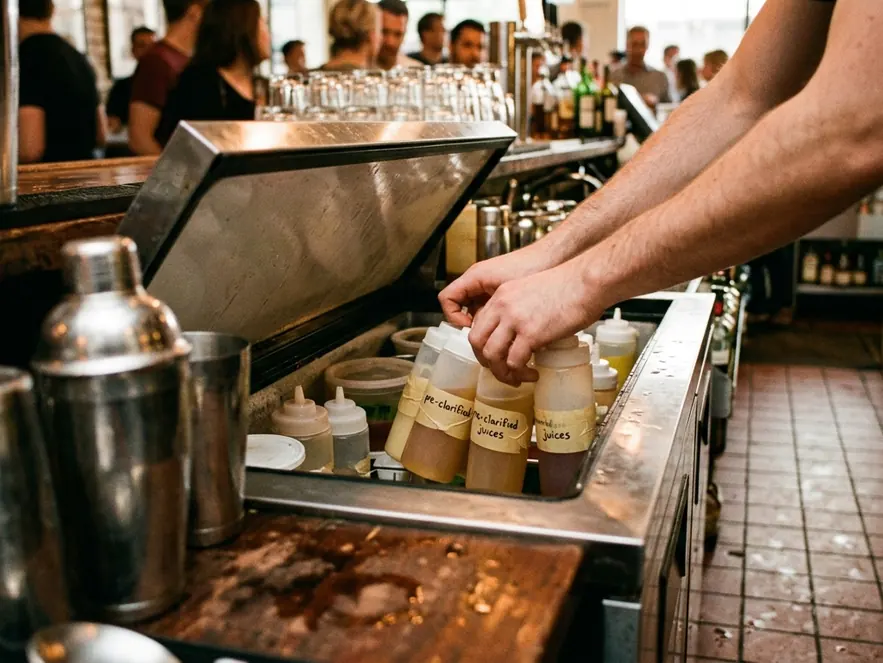
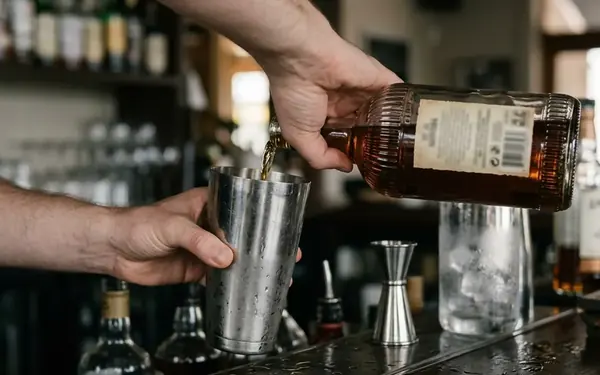
At about 6:40 on a Thursday night in a Houston lounge, the room has that pre-dinner hum: jackets still crisp, menus just opened, the dining room not quite ready for its next wave. A guest at the bar watches the bartender pull a chilled bottle of clarified citrus from the lowboy, measure it into a mixing glass, then finish the drink with two sprays of herb mist and a tiny savory garnish placed with tweezers.
No citrus wheel. No loud garnish built for a camera.
The drink lands more like a first course than a standard cocktail. It has aroma before sweetness, texture before obvious strength, and a quiet sense that someone in the building thought about dinner while building the bar menu.
That is the point of culinary mixology now. In upscale bars, fine-dining lounges, and craft cocktail programs, kitchen technique has moved past novelty. It has become one of the ways a bar tells guests what kind of hospitality to expect before the first plate arrives.
This matters most during the early reservation rush, roughly 6:15 p.m. to 7:45 p.m. from Thursday through Saturday, when guests often want one polished drink before the dining room calls. In that window, the finish has to feel special without trapping the bartender at the pass. A mist, a cold-held clarified component, and a precise garnish can work beautifully if the final touch adds seconds, not a full minute.
What Culinary Mixology Means Behind the Bar
Culinary mixology is not the act of putting a strange ingredient into a shaker and hoping the menu copy does the rest. It is kitchen thinking applied to the glass: seasonality, texture, temperature, aroma, preservation, plating, and flavor architecture.
Structure matters more than surprise
A composed dish rarely works because every ingredient shouts at once. The same rule holds at the bar. A culinary cocktail needs a base, a supporting flavor, a balancing move, and a finish that makes sense when the glass reaches the guest.
Fat-washing shows the difference. A bartender can warm a spirit with brown butter, sesame oil, coconut, or olive oil, then chill it for separation for in the ballpark of 4 to 12 hours and strain it until the liquid pours clean. That is not a garnish trick. It is a prep technique that changes mouthfeel.
Clarification works the same way. Clarified juice or a milk-washed base belongs in labeled bottles, held cold before service. It should not become theater at pickup. The guest experiences clarity and polish; the team experiences mise en place.
The practical toolkit
Fat-washing: adds roundness through controlled infusion and separation.
Clarification: gives juice or a full cocktail base a cleaner texture and more stable appearance.
Shrubs and reductions: preserve fruit character while adding acidity or concentration.
Savory infusions: bring herbs, tea, chile, mushroom, tomato, or spice into the drink with intention.
Acid adjustment: keeps fruit-driven cocktails balanced as produce changes across a menu cycle.
Foams and aromatic garnishes: shape the first impression before the guest tastes the liquid.
Quick Tip: If an ingredient does not change the aroma, texture, balance, or finish, it probably belongs in the kitchen walk-in, not on the cocktail spec.
Why Fine-Dining Bars Are Leaning Into Kitchen Techniques
The demand side is easy to feel from the bar rail. Guests sitting in a tasting-menu lounge or hotel bar may spend 20 to 45 minutes with that drink before dinner, and the glass becomes part of the evening’s pacing.
A culinary cocktail gives the bar a way to meet that expectation without chasing rare bottles or building taller garnishes. It can differentiate through thoughtfulness instead of volume.
The dining room connection
The best examples use one controlled link to the menu. A tomato-water aperitif can sharpen the palate before seafood. A sesame-washed spirit can echo grilled flavors without tasting like a marinade. A cacao-and-spice nightcap can keep dessert in the room after the plates are cleared.
Houston gives this style plenty to work with. Late-summer melon, Gulf-adjacent saline notes, winter citrus, kitchen herbs, chile, tamarind, tropical fruit, smoke, and pastry spice all fit the city’s dining habits when the drink still drinks like a cocktail.
That last part matters. Culinary mixology feels most natural in rooms built for prep discipline: skilled labor, cold storage, recipe documentation, and a steady menu-development rhythm. A crowded event bar can still borrow the idea, but it may need the same concept translated into a batched aperitif or one-touch garnish.
The Flavor Architecture: Acid, Fat, Heat, Salt, and Aroma
I tend to think about these drinks less by category and more by pressure points. Where does the acid land? Does the fat carry flavor or smother it? Does the heat bloom slowly, or does it hit the guest too early?
Acid gives the drink its spine
Acid can come from fresh citrus, verjus, vinegar shrubs, lacto-fermented liquids, or adjusted juices. The goal is not sourness. The goal is shape: a finish that sharpens the drink without making the first sip feel thin.
That is why shrubs work so well in dining & pairings. They can hold fruit character across a menu cycle of roughly 3 to 8 weeks while giving the bartender a steady balancing tool when produce shifts in sweetness.
Fat gives texture, but only with restraint
Brown butter, sesame oil, coconut, olive oil, cream, and dairy-washed spirits can make a cocktail feel generous. Under bar lighting, though, fat has nowhere to hide. If the wash is not separated or stabilized, the drink looks greasy before it tastes anything at all.
Salt, heat, and aroma finish the sentence
Salt and umami work best as seasoning. Saline, miso, tomato water, mushroom, seaweed, and cheese-adjacent notes should support the base spirit rather than become the headline.
Heat needs patience. Chile, peppercorn, ginger, and warm spice should build across the sip. When spice peaks in the first few seconds, it can flatten the base spirit and shorten the finish.
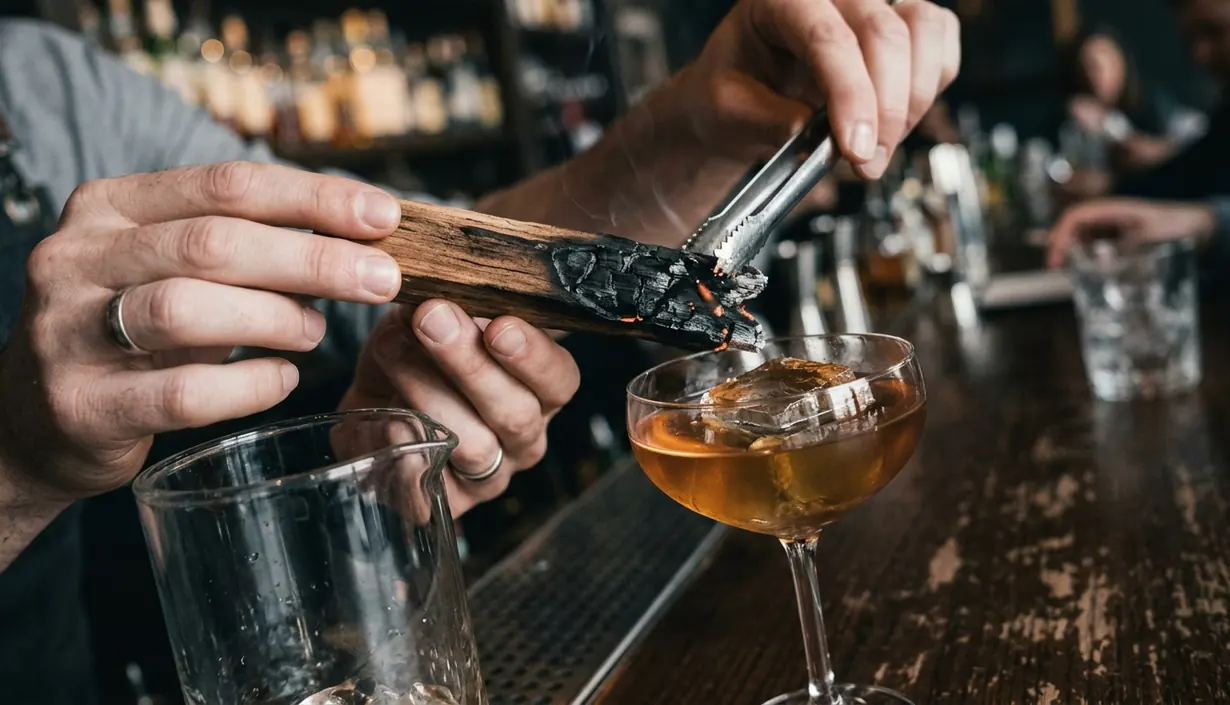
Aroma often makes the first decision for the guest. Expressed citrus oils, fresh herbs, smoke, broth-like vapors, and edible garnishes frame expectation at the moment the glass touches the table.
Where Culinary Cocktails Can Lose the Guest
The fastest way to lose the guest is to build a drink that reads better than it tastes. A cocktail with clarified pineapple, chile oil, miso, smoke, herb foam, and a brittle garnish may sound impressive on the menu. In the glass, it can turn muddy, slow, and awkward if no single flavor leads.
Pushing five assertive cues in one drink usually creates noise. So do garnishes that require utensils without warning, savory infusions that clash with botanical gin, smoky agave spirits, or delicate fortified wines, and textures that shift between the test batch and Saturday service.
Service risk is part of flavor design
Fresh juice, dairy components, cut herbs, house syrups, and perishable infusions need labels with prep date, storage location, and discard timing. Passing that knowledge informally between shifts invites mistakes. The same applies to house ferments, dairy washes, and protein foams, where both texture and food safety can drift during a busy week.
For teams building formal procedures, the FDA Food Code is a useful reference point for thinking about storage, labeling, and handling in a food-service environment.
Note: A surprising savory ingredient should be described by function. “Tomato water for acidity” tells the guest more than a mysterious name-drop ever will.
How an Upscale Bar Can Build the Program Without Overcomplicating It
Start with one culinary axis per drink. Not three. Not five. One.
One cocktail might focus on texture through a dairy wash. Another might focus on aroma through herbs and mist. Another might use preservation through a shrub. Stacking all of those into the debut build makes troubleshooting harder and adds prep load before the drink has earned its place.
A practical development sequence
Choose the base spirit. Decide what the drink must still taste like when all the culinary elements are removed.
Define the inspiration. Name the dish, ingredient, or kitchen move that guides the build.
Identify balance. Choose the acid, sweetness, bitterness, or salt that keeps the idea drinkable.
Test texture. Check whether the wash, foam, reduction, or clarified base holds cleanly in real glassware.
Simplify the garnish. Keep the visual finish useful, fast, and clear to the guest.
A serious development cycle can run in the ballpark of 10 to 21 days: bench trials first, then staff tasting, then a small number of service tests before the cocktail reaches the printed or digital menu. That pace gives the team time to see what happens outside the calm of daytime prep.
Shared prep calendars help. If the kitchen already uses herbs, citrus, melon, tomato, chile, coconut, coffee, or pastry spices, the bar can build from overlap instead of creating one-off inventory that expires between services.
Service shorthand: Staff should be able to explain each culinary drink in roughly 12 to 20 seconds: the familiar reference point, the unusual element, and the expected flavor result.
What Guests Should Watch for Next
Expect more menu-paired cocktails over the next few menu cycles, especially in lounges and fine-dining bars that serve snacks, oysters, crudo, grilled dishes, or dessert. The movement will not look the same everywhere, and that is healthy. A smaller fine-dining lounge, in the ballpark of 24 seats, can support delicate garnishes, cold-held clarified bases, and staff storytelling. A high-energy bar may need the same idea tightened into a simpler aperitif.
Savory aperitifs will likely stay compact and appetite-focused, built with tomato, herb oils, saline, bitter liqueurs, chile, vinegar, or verjus rather than heavy cream or dessert-level sweetness. Low-ABV culinary builds also have room to grow through vermouth, sherry-style profiles, amaro, fruit wines, tea, clarified juice, and shrubs.
The strongest Houston examples will come from the city itself: local produce, Gulf Coast cues, smoke, spice, tropical fruit, and cross-cultural dining traditions. Culinary mixology lasts when it improves hospitality. Build the drink around one clear culinary idea, make it serviceable on a busy night, and let the guest taste the reason it exists.


Your Thoughts
No comments so far.
Add Your Thoughts