
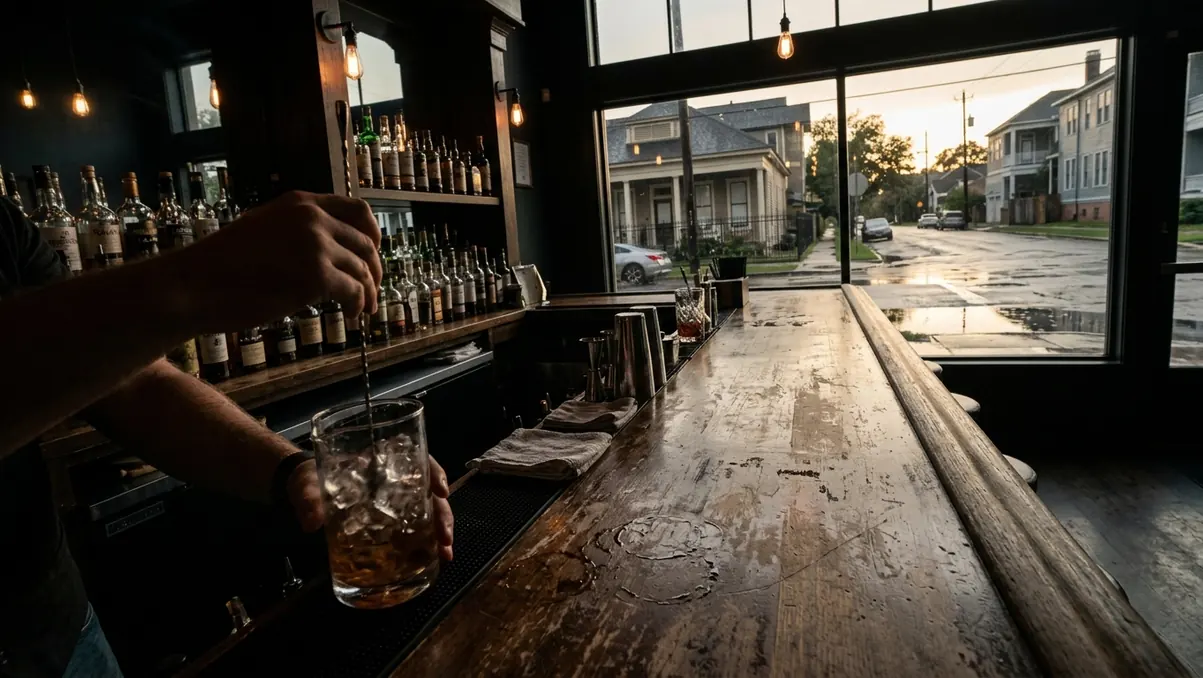
Why Houston's Cocktail Culture Depends on Neighborhoods
The City of Houston recognizes 88 Super Neighborhoods. That single civic number does more to explain the local drinking scene than any list of favorite bars ever could, because it tells you that Houston never organized itself around one nightlife corridor. There is no downtown-only answer here. There never was.
Ask five Houstonians where to get a great cocktail and you will hear five districts, and all of them will be right. The right neighborhood depends on the night you are actually planning — mood, transportation, dinner plans, event timing, and the kind of service you want when you finally sit down.
From multi-destination comparison, a typical Houston evening rarely turns on short pedestrian hops. It turns on 10-to-25-minute cross-neighborhood rides, especially when you are moving between Montrose, Downtown, the Heights, Upper Kirby, and EaDo. And the strongest read on any district shifts between the 6:00–8:00 p.m. dinner-and-cocktail window and the 10:00 p.m.–1:00 a.m. social-lounge window. Same city, different personality.
So treat what follows as a curated neighborhood guide, not a ranking of individual bars. No claim is made here that every venue in a district operates at the same level. The lens is the district, because that is how the city actually plays out after dark. You can browse the official framework through the City of Houston Super Neighborhoods map if you want to see how granular it gets.
Criteria for Selection
The criteria were built around how a guest experiences a full night, not whether one acclaimed bar happens to exist in isolation.
Five things mattered: concentration of serious cocktail programs, quality of the surrounding dining, strength of lounge atmosphere, walkability or route-planning ease, and consistency across different nights of the week. A neighborhood made the guide only if it could plausibly carry more than one part of an evening.
In practice, that meant a district was treated as stronger when it supported at least two distinct cocktail use cases — say, dinner-bar service before 9:00 p.m. and a separate lounge or nightcap option after 9:30 p.m. Route-planning ease was judged by whether a guest could keep the next stop within a short drive or a comfortable walk: a few blocks in compact districts, or a 5-to-12-minute rideshare in more spread-out ones.
Consistency got its own test. A neighborhood was considered across Tuesday-to-Thursday dining nights, Friday-to-Saturday peak social nights, and Sunday-to-Monday lower-energy stretches, because some Houston areas feel like a completely different place outside weekend volume.
Note: This is a neighborhood-culture guide, not a current inventory of every bar, hotel lounge, pop-up, or restaurant beverage program. Rooms change hands, and a single strong bar cannot rescue a district where the surrounding dinner options, parking, or second-stop choices make the night brittle.
The Eight Houston Neighborhoods Worth Planning Around
The list below is organized by cocktail function rather than prestige. What a neighborhood does for your night matters more than its reputation.
-
1. Montrose — Houston's independent cocktail laboratory
Montrose is where creative menus, intimate rooms, and personality-driven service overlap most easily. This is the district for guests who want character over polish. Chef-driven dining sits close to the drinking, the queer nightlife history runs deep, and the bartenders tend to build menus that reward curiosity.
It reads best in the 7:30–11:00 p.m. window, when dinner guests and cocktail-focused regulars share the same rooms. If your night is about conversation and a menu you have never seen before, start here.
-
2. Downtown — historic bar-hopping and theater-night cocktails
Downtown is the strongest choice when a guest wants two or three stops without repeatedly summoning rideshares. Main Street and the Market Square area let you cluster movement, which is exactly what a pre-show or post-dinner window needs.
Plan it around a 90-to-120-minute block and it works beautifully. Just know the trade-off: Downtown can be the easiest cocktail district on a theater or convention night, and less intuitive on a quiet off-night when what you really want is a relaxed patio or a chef-driven neighborhood bar.
-
3. The Heights — relaxed early-evening group pacing
The Heights carries a group beautifully from 5:30–9:30 p.m. Patios, restaurant-bar energy, an easy pace. After that the night either thins out or shifts venue by venue, so treat it as an opening act rather than a closer.
-
4. Upper Kirby — composed cocktails with dinner attached
Upper Kirby suits nights where the bar experience should sit inside a restaurant rhythm rather than a bar-hop. Good for conversation, good for a plan that stays in one place.
-
5. River Oaks — polished dining-room service
When the occasion calls for a composed room and a beverage program that matches the plates, River Oaks answers. This is service-forward territory.
-
6. EaDo — event-adjacent energy
EaDo is most practical within roughly two hours before or after major stadium, arena, or concert activity. Fast movement, energetic rooms, and relaxed service expectations. The same event surge that makes it convenient can make it the wrong choice for a quiet date.
-
7. Midtown — late-night lounge density
Midtown is strongest after 10:00 p.m., when lounge density, mixed crowds, and rideshare convenience matter more than quiet cocktail analysis. Come here for momentum, not stillness.
-
8. Rice Village — easygoing group nights
Rice Village handles relaxed group pacing without pretense. A comfortable landing spot when the goal is company over connoisseurship.
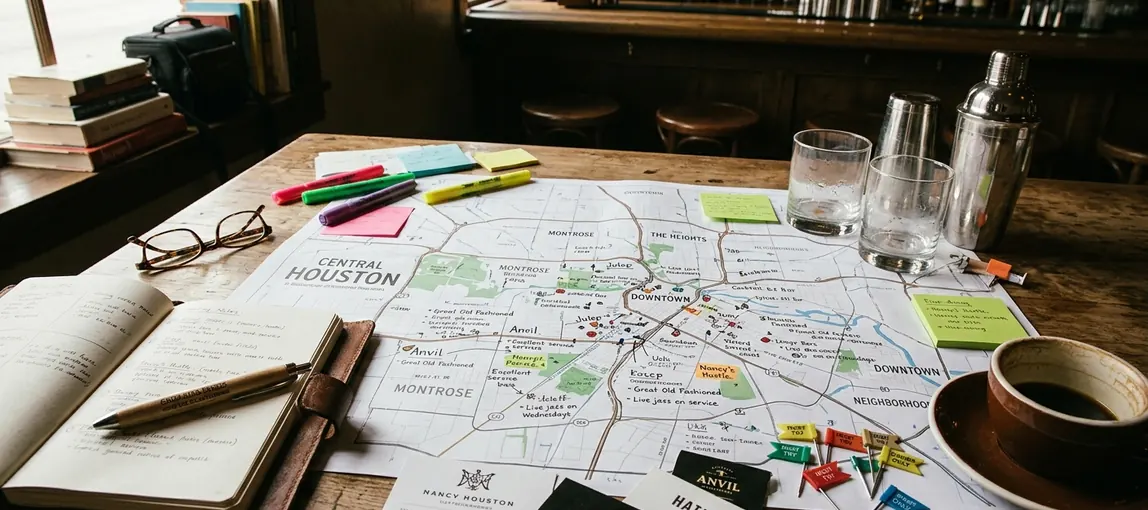
How to Match the Neighborhood to the Occasion
At that point, the choice becomes practical. Instead of asking where the objectively best cocktail lives, ask what the night needs first: conversation, prestige, energy, or proximity.
- First date: Montrose or Upper Kirby, especially a 7:00–9:30 p.m. plan where conversation matters more than venue-hopping.
- Client dinner: River Oaks or Upper Kirby, where the bar sits inside a composed restaurant rhythm across a 90-to-150-minute reservation.
- Solo bar seat: Montrose, Downtown, or Upper Kirby, ideally before the 8:00 p.m. rush or after the dinner peak settles.
- Pre-concert drink: EaDo or Downtown, with your anchor stop chosen before arrival and a departure buffer of at least 30-to-45 minutes before doors or kickoff-style crowd movement.
- Birthday group: the Heights, Midtown, or EaDo, depending on whether you want patio ease, late-night momentum, or event-adjacent energy.
- After-dinner nightcap: stay in the district where you ate — a short transfer beats a scattered route every time.
- Hospitality-industry night out: Montrose late, where the regulars know the difference between a good pour and a lucky one.
Quick Tip: Pick the anchor first. Choose one venue or restaurant, then keep any second stop inside the same district or a short transfer. The night falls apart when you try to stitch distant neighborhoods together.
What to Watch Before You Commit to a Route
Most Houston cocktail disappointment comes from logistics, not drink quality. A few variables can quietly reshape an evening.
Weather is the first. On a humid or rainy night, even a 6-to-8-block walk can feel long enough to change the plan, especially for dressed-up guests moving from dinner to a lounge. What looked like a charming stroll at noon becomes a negotiation by nine.
Events are the second. Check event-adjacent routes the same afternoon, because street congestion and rideshare pickup patterns can shift sharply in the 60-to-90-minute window around major games and concerts. EaDo rewards the guest who planned for the surge and punishes the one who did not.
Parking friction bites hardest at the start of the night, roughly 7:00–9:00 p.m. on Friday and Saturday, when dinner reservations, lounge arrivals, and residents all compete for the same curb.
One more thing worth naming plainly: restaurant-bar leadership and menus can change within a single season. A room that anchored your last great night might read differently now, so verify current hours, reservations, and bar-seating policies before committing to a route. The point is not to worry you — it is to protect the mood of the evening you actually planned.
Choose the Mood Before the Menu
Houston's best cocktail neighborhood is situational, not universal. That is the argument, and it holds up every night of the week.
A good plan usually starts with one anchor and keeps the second stop close. For a two-stop night, dinner at 7:00–8:30 p.m. followed by a nearby cocktail from 8:45–10:30 p.m. almost always beats three scattered venues and a string of rideshares. The city rewards focus.
Match the district to the occasion, pick your anchor, and let geography do the quiet work of keeping the night intact.
So before you scroll another cocktail menu or save another bar to your list, answer the only question that actually sets the evening: which Houston mood are you choosing tonight?
Your Thoughts
No comments so far.
Add Your Thoughts