
When a Zero-Proof Cocktail Takes Its Place at the Bar
I begin the judgment at the moment of service. Inside a Houston fine-dining bar, a chilled stemmed glass arrives beside a classic cocktail. Its exterior is clean, the garnish sits where the guest can catch its aroma, and the server places both drinks with the same measured attention.
That shared ceremony matters because each glass depends on a composed recipe, controlled temperature, clean presentation, and informed service. Respect should follow the quality of those choices rather than the drink’s alcohol content.
A Composed Drink, From the Start
A zero-proof cocktail is an intentionally structured alcohol-free drink. It has a sensory direction, a defined base, contrast, texture, dilution, and a finish. Soda poured over ice or a glass of juice may be pleasant, yet neither becomes a cocktail through presentation alone. A full-proof recipe with the gin, rum, whiskey, or tequila removed usually lacks the structure required to stand on its own.
Compact up-style service often finishes between 90 and 120 mL after chilling and dilution. That volume allows the drink to progress through a dinner course without warming too quickly. The glass may be small, but the recipe work is substantial.
The Trace-Proof Boundary
Ingredient language requires care. In the United States, a beverage labeled nonalcoholic may contain less than 0.5% alcohol by volume. Bitters, extracts, dealcoholized spirits, kombucha, and other fermented components therefore deserve component-level review when a guest must avoid trace alcohol.
Check Every Component
For strict avoidance, staff should review manufacturer documentation and house-made ingredients instead of relying solely on the absence of a full-proof spirit.
What Disappears When Ethanol Leaves the Glass
A base spirit performs several jobs at once. It carries volatile aromas, supplies weight, contributes drying heat, and extends the finish. A modifier redirects the profile. Acid and sweetener create tension, water controls intensity, and the garnish delivers the opening aroma.
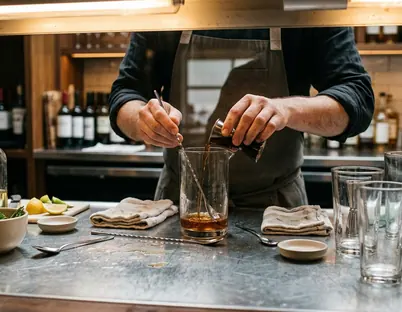
Removing the spirit creates multiple structural gaps at the same time. The resulting drink may feel thin, sharply acidic, excessively sweet, or brief on the palate. Adding more syrup can provide body, though it often pushes the recipe toward heaviness without restoring aromatic lift or length.
Assign Jobs Before Choosing Ingredients
- Structural base: establishes the central flavor and body.
- Contrast: supplies acidity, bitterness, salinity, spice, or another counterpoint.
- Sweetener: rounds hard edges and carries flavor.
- Dilution: adjusts intensity, texture, and serving volume.
- Aromatic garnish: shapes the first sensory impression.
This job-based approach gives the bartender room to create an original drink. A tea-led zero-proof cocktail does not need to impersonate a whiskey drink. It does need a clear center, controlled sweetness, and enough persistence to hold the guest’s attention.
Dilution also behaves differently in a mixture with little or no alcohol. A spirit-forward cocktail may gain roughly 20 to 30 mL of water during controlled stirring, but copying its stir count can mislead. Measuring the finished yield gives a more useful answer.
How Balance Is Built Without the Burn of a Spirit
The guest encounters balance in sequence: aroma first, then temperature and texture, followed by sweetness and acidity, bitterness or spice, and finally the finish. Recipe adjustments work best when they target a specific weak point in that sequence.
Repair the Missing Structure
Verjus or citrus can sharpen a soft build. Tea tannins dry a fruit base, while a restrained saline solution can clarify flavors that seem blurred. Shrubs bring acidity with fruit depth. Coffee, herbs, spices, chile, and bitter botanicals can add length, provided one ingredient does not dominate every stage of the sip.
Texture deserves equal attention. Carbonation lifts aroma and creates movement. Clarified juices can provide clean flavor with a polished mouthfeel. Tea tannins add grip, emulsified ingredients create body, and controlled viscosity slows the drink across the palate. Heavy syrup offers only one kind of weight and can flatten food pairings.
For a carbonated highball, chill the base and glass before assembly. Add the sparkling component last, then mix with one or two gentle lifts. Repeated stirring releases carbonation and leaves the middle of the drink flat.
Houston Heat Changes the Format
On a warm Houston evening, a 150 to 210 mL tall serve over dense ice can remain refreshing through an appetizer. A concentrated tea-, coffee-, or spice-led recipe often works better as a 75 to 105 mL stemmed drink. Format follows sensory weight and dining pace.
Garnish placement is equally practical. Express citrus peel 5 to 10 cm above the surface so the oils reach both drink and rim. A garnish positioned beyond the guest’s nose contributes little to the opening impression, however attractive it looks.
The Recipe Work Behind a Serious Zero-Proof Cocktail
Development should begin with a short flavor brief. “Dry and herbal,” “bright and saline,” or “rich and spice-led” gives the recipe a destination. A long ingredient list rarely provides the same clarity.
Build in a Deliberate Order
- Define the intended character. Specify aroma, flavor direction, body, and finish.
- Choose a structural base. Tea, fruit, coffee, botanicals, or spice can anchor the drink.
- Add one clear contrast. Use acid, bitterness, salinity, heat, or tannin with purpose.
- Establish texture. Decide whether the drink should feel sparkling, lean, silky, or concentrated.
- Calculate dilution. Measure the finished yield rather than relying on a familiar stir count.
- Test at serving temperature. Warm ingredients conceal how sweetness and aroma will behave in the glass.
- Refine the finish. Look for length that encourages another sip without leaving blunt bitterness.
A useful dilution trial uses three glasses with 15, 25, and 35 mL of added water. Serve each at the same temperature and select the version that preserves aroma while easing harsh acidity or excessive viscosity.
Make the Recipe Repeatable
Record liquid components in milliliters or grams, and weigh house syrups when consistency matters. Free-pouring an approximately 5 mL bitter or saline adjustment can noticeably change a small drink between services. Consistent ice, deliberate glassware, calibrated sweetness, and a final taste before service keep the written recipe intact at the bar.
Fresh juice and house infusions need sanitized tools, prompt refrigeration, and labels showing the ingredient plus preparation date and time. Each batch should receive a discard point under the bar’s food-safety plan.
A pre-service check 15 to 30 minutes before opening can verify batch labels, garnish condition, ice format, glass temperature, carbonation, finished yield, and the first complete drink from the station. That short check protects the guest experience during a busy dinner push.
Equal Craft Also Requires Equal Hospitality
Guests read the bar’s attitude before tasting the drink. Menu placement, naming, glassware, ice, garnish, pacing, and staff knowledge signal whether zero-proof orders belong within the full hospitality experience.
Flavor-led descriptions make ordering easier. Words such as dry, bitter, sparkling, citrus-led, and savory tell the guest how the drink behaves. A concise menu entry can fit in 8 to 14 words: the drink name, three or four flavor-bearing components, and one structural cue.
Service Should Follow the Course
During a tasting-menu dinner, fire the zero-proof pairing with its corresponding course. An arrival three to five minutes before or after the alcoholic pairing separates one guest from the table’s shared rhythm.
For a celebratory dinner, business gathering, or event-night reservation, staff can resolve most ordering needs with two questions: Which flavor direction does the guest prefer? Must any ingredient, including trace alcohol, be excluded? The exchange stays brief while giving the bar enough information to serve accurately.
Price Reflects More Than Proof
Fresh produce, specialty ingredients, preparation time, spoilage, ice, glassware, and table service all contribute to cost. Alcohol-free ingredients do not automatically produce an inexpensive cocktail. Value still rests on execution: the clarity of the recipe, the care of the presentation, and the quality of the drinking experience.
A costly glass with weak aroma and syrupy balance offers poor value. A carefully built zero-proof cocktail can justify its place on a serious Houston menu through labor, ingredient quality, and disciplined hospitality.
Judge the Glass by the Same Standard
Zero-proof and high-proof cocktails can follow different sensory paths while earning the same level of discipline and curiosity. The useful question is whether the glass forms a coherent sequence from first aroma to final impression.
The Houston Five-Contact Test
- Notice the opening aroma. It should be clear, relevant, and positioned close enough to reach the guest.
- Identify the structural center. Find the tea, fruit, botanical, coffee, spice, or other deliberate base.
- Check sweetness against acidity. Neither should erase the central flavor.
- Assess texture and dilution. Observe the chilled entry and how the drink changes as it warms.
- Wait for the finish. Allow two to three seconds after swallowing before judging its length and food-readiness.
Immediate disappearance suggests a short finish. Persistent bitterness without renewed aroma can indicate an overcorrection. The strongest finish leaves enough flavor to register while making the next sip appealing.
Proof Is One Choice
Alcohol content is an ingredient decision; balance, intention, and hospitality are the measures of craft.
At your next Houston bar visit, order one zero-proof cocktail and assess it on arrival and again after five to seven minutes for aroma, balance, texture, temperature, and finish.

Your Thoughts
No comments so far.
Add Your Thoughts