
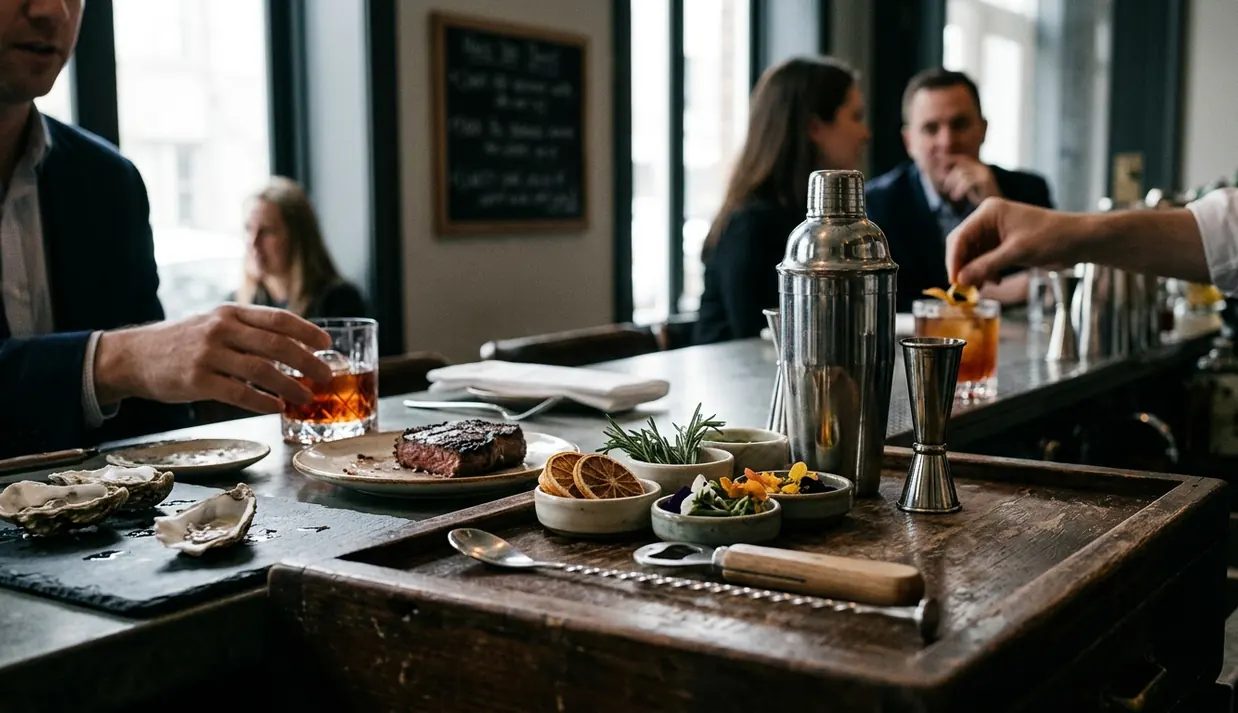
A good dinner cocktail pairing starts before anyone says gin, whiskey, tequila, or sparkling wine. I look first at structure: acid, sugar, spirit weight, bitterness, carbonation, aromatics, dilution, and temperature. Then I look at the plate: fat, salt, heat, sweetness, sauce, and texture.
That sounds tidy on paper. At the table, it is more physical. A cold glass makes oysters taste cleaner. A bitter drink can pull butter back into balance. Too much sugar can flatten shellfish in two bites.
Contents
- What Makes a Cocktail Pairing Work at Dinner?
- Criteria for Selection
- Seafood Pairings
- Steak Pairings
- Small-Plate Pairings
- How to Order Pairings Without Slowing Service
- Pairing Mistakes That Make Food Taste Smaller
- The Best Overall Move for a Houston Dinner
What Makes a Cocktail Pairing Work at Dinner?
A cocktail pairing is the deliberate matching of a drink’s structure with a dish’s pressure points. Acid meets fat. Carbonation cuts frying and butter. Bitterness checks richness. Temperature protects delicate flavors. Aromatics either lift the food or walk all over it.
Cocktails can hit harder than wine because the bar has more adjustable parts in play. A short stirred drink in the 3 to 4 ounce range behaves differently from a 6 to 9 ounce highball lengthened with soda, sparkling wine, or mineral water. One concentrates. The other refreshes.
That size difference matters during dinner. A compact drink can feel like a course of its own. A longer drink can keep the palate moving while plates arrive in waves.
For raw bar and chilled seafood, the best pairings usually start cold and dry. A chilled mixing glass, a cold coupe or Nick and Nora, and a restrained hand with sweetness help preserve briny, mineral flavors. For richer plates, I start somewhere else: the sauce and cooking method. Butter, frying, cream, grill char, demi-glace, citrus marinade, chile heat, and raw salinity often matter more than the protein name printed on the menu.
This guide fits polished Houston-style dining: seafood bars, steakhouse dinners, lounge menus, and shared small-plate service. It is not trying to solve every cuisine or every regional table. The point is to help a guest order well at a serious bar without turning dinner into a seminar.
Criteria for Selection
The drinks here pass a practical test: a guest should be able to order them in one sentence within 10 to 20 seconds. Think, “a dry French 75 with crab,” or “a balanced Old Fashioned with the ribeye.” That is enough information for a prepared bar to move.
I favor classics and near-classics because serious bars can usually execute them without a custom recipe negotiation. The best pairing is not the most obscure build. It is the one the bartender can make cleanly while the dining room is full.
- For seafood: acidity and carbonation do the heavy lifting with rich, fried, buttery, or briny plates.
- For steak: oak, bitterness, smoke, and controlled sweetness work better than bright acidity alone.
- For small plates: longer, colder, less sweet drinks usually cover more ground than short, spirit-forward ones.
The safest pairing question is simple: What is the dominant texture or sauce on the plate? Once that is clear, the cocktail choice tightens quickly.
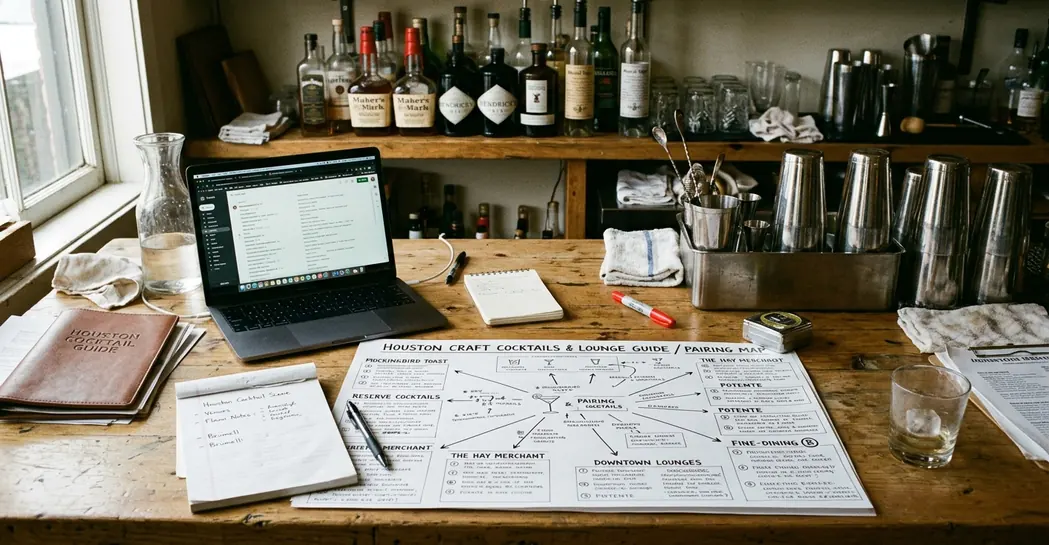
Summary: Choose the cocktail by structure first, spirit second. Gin, whiskey, and tequila matter, but acid, sugar, bubbles, bitterness, dilution, and temperature decide whether the food tastes larger or smaller.
Seafood Pairings: Bright, Saline, and Low-Weight Cocktails
Seafood rewards restraint. The drink should feel clean beside the plate, not louder than it.
Houston dinners often move from chilled oysters into Gulf shrimp, crudo, crab, lobster, scallops, or fish with citrus and chile. That pacing asks for drinks that stay bright, cold, and light on the palate.
1. Martini with oysters, crudo, and chilled shellfish
A Martini works with oysters and crudo because it is dry, cold, aromatic, and clean. Dry vermouth, lemon oil, and a restrained olive-brine accent echo salinity without dragging sweetness into the bite.
For oysters or crudo, a Martini in the ballpark of 3 ounces keeps the pairing compact. It should arrive cold enough to feel almost architectural. The drink touches the same mineral register as the seafood, then gets out of the way.
Note: This pairing is aimed at raw or simply dressed seafood. Fried seafood, creamy seafood, or heavy remoulade usually needs bubbles, citrus, or a longer drink instead.
There is one mistake I watch for here: treating the Martini as a flex. Extra dirty, extra aromatic, extra everything can push the seafood into the background. With chilled shellfish, clean beats clever.
2. Paloma or Ranch Water with grilled shrimp and Gulf fish
Grilled shrimp with lime and chile can handle tequila, grapefruit, and mineral water. Chilled shrimp with cocktail sauce often cannot. That difference is the whole lesson.
A Paloma or Ranch Water built as a 6 to 9 ounce highball brings lime, grapefruit or mineral water, tequila, plenty of ice, and enough dilution to stay refreshing. With Gulf fish, citrus marinade, light spice, and grill char, the drink supports the food without becoming heavy.
For buttered crab, lobster, or scallops, I would move toward a dry French 75. Lemon and in the ballpark of 2 to 4 ounces of sparkling wine can lift butter when the build stays sharp. A sweet French 75 with buttered crab can make the shellfish taste dull; a drier build with lively bubbles makes the same plate feel cleaner.
Steak Pairings: Structure for Fat, Char, and Sauce
Steak changes the pairing problem. Now the drink has to deal with beef fat, Maillard char, butter, mushrooms, demi-glace, pepper, and seared crust. Brightness still helps, but structure matters more.
The spirit-forward cocktail usually belongs after the opening seafood or salad course, roughly when the steak is ordered, fired, or expected within the next 15 to 20 minutes. Bring it too early and it tires the palate before the richest food arrives.
4. Old Fashioned with ribeye or New York strip
An Old Fashioned earns its place with ribeye and New York strip because whiskey oak, bitters, orange oil, and a small amount of sugar speak the same language as beef fat and grill char.
The build needs discipline. A steak-friendly Old Fashioned should stay tight: hovering around 2 ounces of whiskey, bitters, expressed citrus oil, and no more than a small barspoon to shy of a quarter-ounce of sweetener. Once it turns syrupy, the steak feels heavier.
I like this pairing most when the meat has a real sear and the plate is not buried under sweet sauce. The drink should frame the crust, not glaze it.
5. Boulevardier with filet, strip steak, or mushroom sauces
A Boulevardier brings a different kind of control. Campari bitterness and sweet vermouth sit naturally beside butter, mushrooms, demi-glace, and savory sauces. Served up or on a large cube, it usually lands as a compact 3 to 4 ounce drink, which is plenty.
This is the steakhouse cocktail for someone who wants richness with an edge. Filet with mushroom sauce makes sense. Strip steak with a seared crust makes sense. Lean, barely sauced beef is less convincing because the drink may outpace the plate.
Smoke needs similar restraint. A heavily smoked agave cocktail can bury oysters or crudo, but that same smoky base can fit charred steak, roasted chile, or fajita-style beef when lengthened with soda and citrus. Smoke should point to the grill, not cover it.
Small-Plate Pairings: Flexible Drinks for a Shared Table
Small plates do not reward precision in the same way a single entrée does. A shared table might see fried bites, cheese, vegetables, cured fish, mushrooms, olives, and salty snacks in overlapping waves.
So I choose flexibility. Longer. Colder. Less sweet.
7. Aperol Spritz or dry vermouth spritz with fried bites, cheese, and vegetables
An Aperol Spritz or dry vermouth spritz in the 6 to 8 ounce range gives bubbles, bitterness, and chill without exhausting the palate after the first dish. It can handle fried bites, cheeses, and vegetable plates because it resets the mouth between textures.
The dry vermouth version is especially useful when the food is savory rather than sweet. It keeps the drink in the aperitif lane and avoids turning a vegetable plate into dessert.
8. Sherry cobbler or low-ABV sour with mushrooms, charcuterie, and savory tapas
A sherry cobbler or low-ABV sour over crushed ice can run 5 to 8 ounces in the glass, which gives it time. That matters when plates arrive in clusters rather than courses.
Nutty, saline, and oxidative notes make sherry useful with mushrooms, charcuterie, nuts, and savory tapas. It does not fit every dish, and it should not try to. Its strength is that it can bridge earthy and salty flavors without leaning on heavy spirit weight.
9. Americano or Negroni Sbagliato with olives, cured fish, and salty snacks
An Americano or Negroni Sbagliato brings bitterness, vermouth aromatics, and carbonation to olives, cured fish, chips, and salty snacks. When several plates arrive within an 8 to 14 minute window, that kind of palate reset is more useful than a precise one-bite match.
Quick Tip: For shared plates, ask for the driest acceptable version of a spritz, cobbler, or highball if multiple dishes are arriving at once.
How to Order Pairings Without Slowing Service
Ordering a pairing is a hospitality problem, not a trivia test. The server or bartender needs the variables that change the drink: dish, preparation, sauce, and sweetness tolerance.
Use a script like this:
I am having oysters first and a ribeye after; I like drinks dry rather than sweet. Could you steer me toward a bright first cocktail and something bitter or whiskey-based for the steak?
That takes 15 to 25 seconds and gives four useful decision points: protein, preparation, sauce, and sweetness tolerance. It also respects the pace of service.
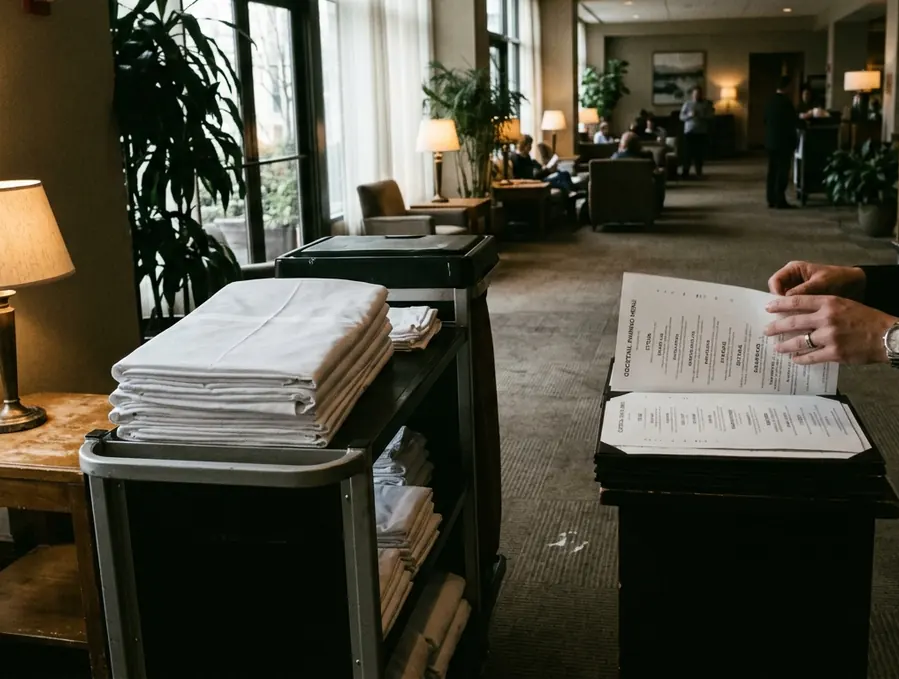
Sequence matters. Lighter, colder, brighter cocktails should lead. Stirred, spirit-forward, bitter, smoky, or oak-driven drinks should wait until richer food is on the table or close to arriving.
Do not order a new cocktail for every plate unless the meal is built that way. One drink can cover two adjacent courses when the flavors are related: oysters into crudo, crab into scallops, strip steak into mushrooms. That can carry a 25 to 45 minute span without making the bar chase the table.
If the menu already groups seafood, steak, or lounge plates, ask for the house build. The bar has likely prepped citrus, chilled glassware, and built syrups around those menu cues.
Pairing Mistakes That Make Food Taste Smaller
The most common pairing mistakes do not ruin dinner. They shrink it. The food still arrives looking right, but the flavors feel quieter than they should.
- Very sweet cocktails with raw seafood: Sweet sours, dessert-style tropical builds, and sparkling drinks with a heavy syrup hand can make oysters, crudo, and chilled shrimp taste less briny within the first few bites.
- Heavy smoke with oysters or crudo: A smoky mezcal drink can dominate the aroma before the food reaches the palate. Smoke is safer when the dish itself has grill char, roasted chile, or a smoked garnish.
- High-proof stirred drinks too early: A short, high-proof cocktail at the start of a tasting-style dinner can feel tiring when the meal includes 5 to 8 savory items over a 60 to 95 minute span.
- Aggressive bitterness with chile-forward plates: Bitter cocktails can make fresh green chile, hot sauce, or vinegar-heavy marinades feel sharper.
These cautions are practical, not rigid. The same ingredient can succeed when the bartender lowers sweetness, adds dilution, changes the garnish, or lengthens the drink.
That is why the conversation should stay focused on the plate in front of you. Raw salinity needs one kind of help. Butter needs another. Char asks for something else entirely.
The Best Overall Move for a Houston Dinner
The clean decision path is this: choose bright, dry, cold, or saline for seafood; choose oak, bitterness, smoke, or controlled sweetness for steak; choose sparkling, lengthened, and lower-weight drinks for small plates.
A dry French 75, restrained spritz, Ranch Water, or Paloma can open the meal. An Old Fashioned or Boulevardier can take over when ribeye, strip steak, mushrooms, demi-glace, or charred beef arrives.
Do not force one cocktail across the whole meal. Order two well-timed drinks: a dry sparkling citrus cocktail for the first 20 to 35 minutes of seafood or small plates, then a bitter whiskey cocktail when the steak or richest plate is close to the table. That is the fine-dining bar sequence I would choose for a Houston dinner.

Your Thoughts
No comments so far.
Add Your Thoughts